Loma Linda, California
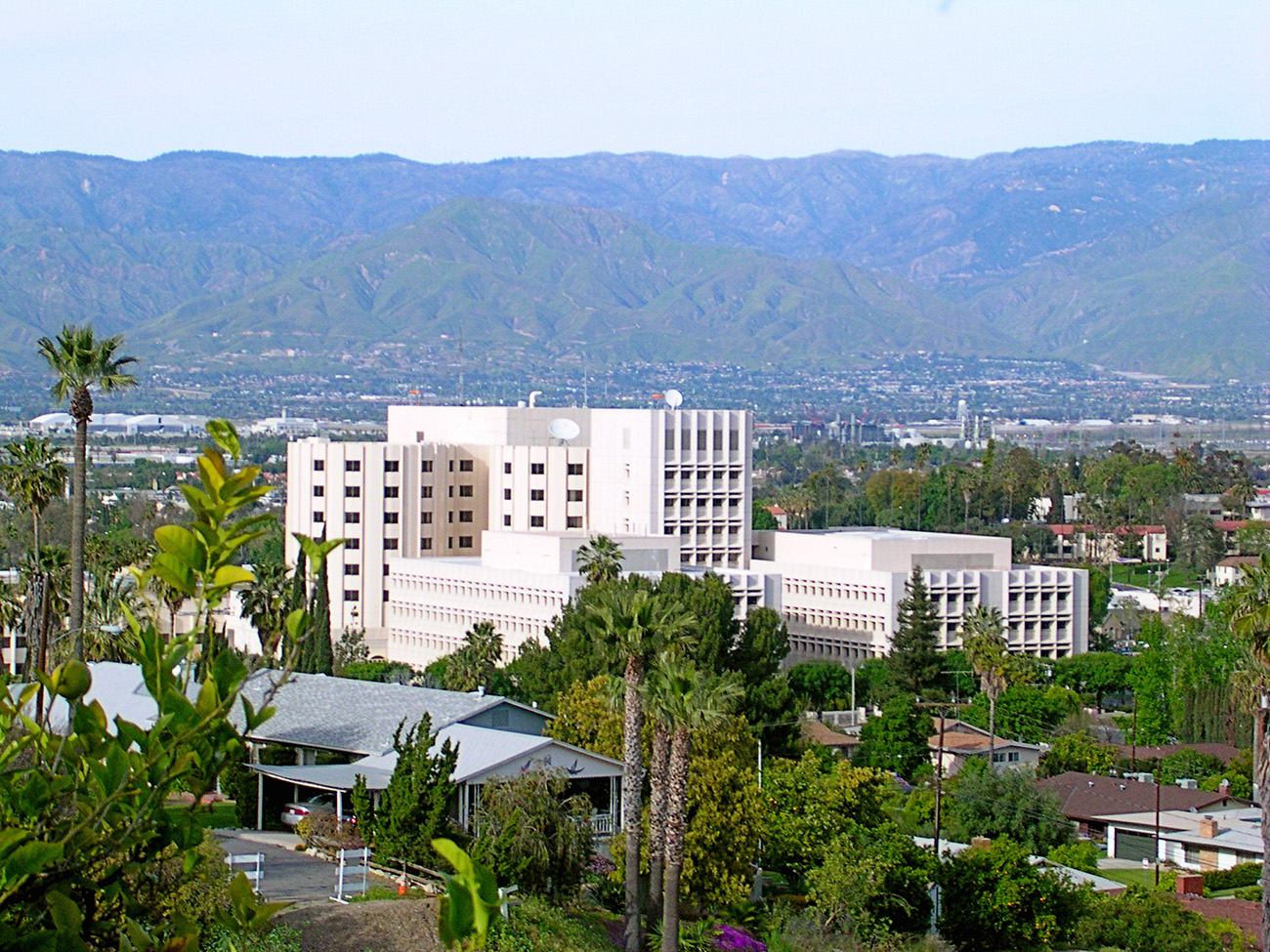
Photo: Loma Linda University Medical Center by Persian Poet Gal, via Wikimedia Commons. Public domain.

A small city east of Los Angeles, Loma Linda established an advanced broadband standard for new construction and pooled public and private investment to deploy a network that has attracted businesses and boosted both retail sales and home values in the community.
In consultation with the community and property developers, city government created a Connected Community project that envisioned every home, commercial and government building connected with a 10 Gbps network. As part of implementation, it created what it called The Loma Linda Standard for all new residential and commercial construction as well as remodeling affecting more than 50% of a structure. The standard defined how internal cabling, the “wiring closet,” the demarcation and external conduit networks were to be constructed to ensure that every resident or tenant of every building had the potential to access high-speed broadband services.
The standard created a “bias toward broadband” among developers that proved transformative for the community. From 2004 to 2007, nearly a dozen projects went into development that incorporated the Loma Linda Standard.
Population: 22,000
Website: www.lomalinda-ca.gov
Smart21 2007
LaGrange, Georgia

A rural city of 26,000 people 60 miles southwest of Atlanta, LaGrange has pioneered in developing public-private ventures for broadband-based economic development. Set in the rural Georgia countryside, LaGrange is an enterprise-based community that levies no local taxes but instead earns revenue by delivering services: electricity from the municipal-owned plant, water and sewer, and most recently telecommunications. Through partnerships with companies including ITC Holding and Charter Communications, the city has funded and constructed a total of four broadband networks, serving businesses, institutions and residents within and beyond the city limits.
Creating a Community of Use
Using this infrastructure, the city introduced in 2000 a free high-speed Internet access service for all residents, with free installation and training, delivered via a Worldgate set-top system and the cable TV network. Free Internet access has become a valuable community-building tool that provides residents of all ages and economic levels with email and Web-browsing services, creating a “community of use” for Internet and broadband applications. Using its network, the city has attracted a new calling center company and recently opened an Internet hosting center and small-scale TV production facility. At the same time, its network operations generate over $1 million in revenue for the city treasury each year. Despite its small size and location in a rural area of the US, LaGrange is a proven leader in broadband deployment and the creation of applications that attract a critical mass of local users.
Population: 26,000
Website: www.lagrange-ga.org
Intelligent Community of the Year 2000
Top7 2002
Florida High Tech Corridor

In 1996, a group of Florida educators, business owners and economic developers teamed to create the Florida High Tech Corridor Council in an effort to make Florida, known worldwide as a tourist destination, a viable place for high-tech industries. The Corridor includes 21 counties stretching across the center of the state from Cape Canaveral on the Atlantic to Tampa Bay on the Gulf coast. This regional community now contain 6,800 high-tech companies employing more than 158,000 workers in optics and photonics, medical technology, information technology, aviation and aerospace, simulation and training, and microelectronics. Business Week has rated it one of the fastest-growing technology centers in America. In terms of broadband, the region ranks among the best-served in the nation, with the local carrier, Verizon, having invested more than $1.7 billion in the last five years. For consumers and small businesses, companies including Verizon, GTE, RoadRunner, Time Warner, Earthlink and AOL deliver DSL and cable modem service — an array of providers that most Americans can only dream about.
Effective Collaboration
Like most successful technology clusters, the Corridor was the result of effective collaboration between academia (University of Central Florida and University of South Florida), the private sector and local and state government. That cooperation continues, with the partners creating programs in workforce development to fill an anticipated gap between the growth of the working age population and demand for employees, including US$80 million recently raised by the universities and private sector to fund new workforce development and research programs. The Council was also able to attract a $1.4 million grant from the National Science Foundation to fund technology education. The Florida High Tech Corridor Council is an outstanding example of a public-private partnership that aims to solve workforce development problems for the broadband economy before they can stifle future growth.
Population: 5,380,000
Website: www.floridahightech.com
Top7 2002
Dubuque, Iowa

Dubuque is a city of middle America, surrounded by farmland, with a central business district beside the Mississippi River. And in recent decades, it has received the brunt of the brutal economic changes brought by automation and ICT productivity gains. In the 80s, its largest employer laid off half of its workforce in Dubuque. This, together with the decline of family farming, drove unemployment to 23%, the highest in the nation, in succeeding years.
Sustainable Dubuque
In response, the Mayor and City Council led a broad-based effort to forge a new vision for the city’s future. The result was Sustainable Dubuque, a commitment to create a prosperous, livable and equitable community. The vision spawned multiple efforts. One is a set of smart city projects covering water use, electricity use and public transit. Working with IBM, the city installed sensors, connectivity and software to analyze performance and provide data to users. Starting with 300 homes, the smart water system is now available citywide and is credited with a 7% reduction in water use and an eightfold gain in the detection and fixing of leaks. It has also reduced water treatment costs by $65,000 and increased water revenues by nearly $185,000. The smart travel program tracks 1,500 riders and uses the data to set policies that have produced a 28% increase in ridership over 4 years.
Putting Dubuque to Work
Dubuque Works is a workforce program that unites government, business and educators to enhance the city’s human capital, conduct joint research to develop evidence-based recommendations, and provide outreach to guide area students from school to work. Over the past four years, the program has created more than 5,000 jobs and Dubuque, with just 3% of the state’s population, has been responsible for 10% of the state’s job growth. These different initiatives have attracted more than $37 million in Federal and state grants, which the city has used to stimulate additional workforce development and sustainability efforts. Dubuque’s revival is a work in progress but its early successes create confidence in a more prosperous, equitable and sustainable future.
Population: 58,253
Website: www.cityofdubuque.org
Smart21 2015
Dublin, Ohio


Photo courtesy of the City of Dublin, Ohio.
The small city of Dublin traces its roots to 1810, and its name to a surveyor who came to America from that fabled Irish capital. It was a quiet town until the 1970s, when an interstate highway connected it to the region and a new golf club gave people a reason to go there. Located near the state capital of Columbus, it evolved into an affluent bedroom community – and might have remained so if not for an investment that was new for its time.
Most American cities and towns fund themselves on property and sales taxes, but Dublin has a local income tax. It provides a dependable stream of revenue that allows the city to invest for the long term. One of those investments has become a connecting thread that unifies and powers its other economic and social assets. They call it DubLink.
A Network is Born
Following telecommunications deregulation in 1996, Dublin began installing a network of underground conduit to encourage deployment of broadband by private carriers. A public-private partnership with the Fishel Company soon followed, and by 2003, Dublin had built and installed optical fiber in the DubLink network. It was justified in part by the ability to offer high-speed, high-quality connections among city facilities, sharply reducing telecom costs. But it also opened the door to providing affordable high-capacity connectivity to corporations that had chosen Dublin for their home or regional offices, including Cardinal Health, Quantum Health and the Wendy’s fast-food chain.
As Dublin installed more and more fiber in its conduits, it began doing capacity-sharing deals other public and public-private entities. DubLink interconnected with Columbus FiberNet, which reaches into cities across the Columbus Capital Region. It partnered with the Ohio Supercomputer Center (OSC), carrying some of the traffic on OSC's 1,600-mile fiber backbone. In return, the OSC and Dublin joined forces to create OARnet, a fiber infrastructure connecting governments, schools and businesses to Ohio colleges, universities, research institutes and Federal labs. Other fiber transport partnerships included Central Ohio Broadband, linking with other cities that have developed fiber networks, and agreements with two carrier hotels in Columbus to exchange traffic in return for giving DubLink customers connection to global carriers.
Invisible Infrastructure
Connectivity – and Dublin’s skill at negotiating capacity-sharing deals – paid dividends. The Supercomputer Center and OARnet gave Dublin schools, businesses and institutions access to next-gen networking technologies and massive data-center capacity. Dublin uses DubLink as a backbone for e-government services and a Wi-Fi network, for which it builds and manages hardware while a private company provides services. The city uses the network for mobile computing by its first responders and field staff, fleet monitoring of snowplows and other city vehicles, and video monitoring of traffic. It also supports city-sponsored cultural events, like the Dublin Irish Festival weekends and the Jack Nicklaus' PGA Memorial Tournament, taking place in that golf club founded in the Seventies.
From its founding, DubLink maintained a bright line between public and private use because municipalities operating their own networks have frequently been the target of lawsuits by private-sector carriers. The city delivered no services except for its own government traffic, and leased conduit space or its own fiber to carriers serving the business market. When, in 2022, it requested proposals for construction of a fiber-to-the-home network for residents, it stuck to the same strategy. The plan called for the city to invest several million dollars in the project, but for the network to be built and operated by a private carrier.
Dublin retained an experienced consultant to review the submissions, guide contract negotiations and monitor the planning and construction by the winning bidder. That winner was altafiber, formerly one of the Bell operating companies, which gained a 15-year operating agreement. Construction began in April 2024 and was substantially completed in December 2025, one year ahead of schedule. More than 15,000 Dublin homes gained access to bandwidth of up to 10 gigabits – and just as important to Dublin’s future, the real estate development community gained a high-value amenity for their projects.
Entrepreneurial Opportunity
It takes more than data pipes, however, to build a competitive economy. Applying the same skill it brought to leveraging DubLink, the city has dedicated itself to building an entrepreneurial economy that can deliver new sources of growth and both attract and retain talent.
Its first initiatives go back as far as 2009, when it opened the Dublin Entrepreneurial Center (DEC) and invested US$625,000 to attract a regional nonprofit accelerator called TechColumbus (now known as Rev1 Ventures) to energize it. DEC is now home to an average of 50 companies and support organizations, including the Center for Innovative Food Technology, the Ohio Fuel Cell Coalition and Dublin’s own Center for Global Business Development. Within the first 10 years, the city’s investment in TechColumbus yielded nearly $15 million in investment, debt financing and new revenue.
This ongoing commitment to support and strengthen entrepreneurship helps explain why there are more than 4,000 companies in Dublin, with an average of just seven employees each, despite the city’s success in hosting facilities for multinational corporations. It also accounts for the fact that this city of 50,000 has a daytime population exceeding 70,000.
Nonetheless, Dublin still benefits from proximity to Columbus, the state capital, with its many colleges and universities. Eighty percent of residents have a bachelor’s or graduate degree. But Dublin’s leaders understand the vital importance of creating a workforce that meets the specific needs of its major employers and fast-growing entrepreneurial companies.
The city began by hosting a series of education and business roundtables, which led to an annual Business-Education Summit on Workforce Development. Among other results, the effort led to a partnership between the state-sponsored BioOhio program and Dublin’s Tolles Technical & Career Center for the creation of a biotechnology program, and another between the city and the Columbus State Center for Workforce Development to bring targeted training programs to the city.
The Bridge Street District
Dublin’s Historic District is rich in character and continues to evolve alongside the community’s forward-looking vision. Anticipating demographic shifts, the city planned the Bridge Street District as a vibrant extension of downtown. The District brings together residential, commercial, dining and entertainment experiences in a connected, pedestrian-friendly setting – positioning Dublin to meet the needs of a dynamic, modern workforce.
The Bridge Street District brings that vision to life as a vibrant, walkable, mixed-use neighborhood featuring a blend of residential, office, dining and retail spaces, complemented by parkland on both sides of the Scioto River. Largely completed in 2020, the district has proven highly successful, spurring continued expansion and investment. Today, it serves not only as a dynamic destination, but also as a visible hub for Dublin’s next generation of innovators.
Building on this momentum, the newly announced Riverview Village is planned as a dedicated innovation hub that brings together entrepreneurs, startups and business leaders in a collaborative, flexible environment. Designed to foster connection and creativity, the space will serve as a welcoming destination for the broader community - blending workspace, gathering areas and programming to support both economic growth and community engagement.
Healthcare Advances
Healthcare has been a particular beneficiary of Dublin’s high level of connectivity and the anchoring presence of Cardinal Health, a Fortune 17 provider of healthcare management services. OhioHealth, a nonprofit network of hospitals and healthcare facilities, uses DubLink and partner networks to connect is corporate headquarters and five major hospitals and billing centers across Central Ohio. Its innovative Dublin Methodist Hospital employs technology to create a completely digital, wireless and near-paperless environment that better serves patients while increasing productivity. It was named one of the “Most Wired” hospitals in America by Hospitals and Health Networks magazine.
Innovation is not restricted to in-patient care. Outpatient Care Dublin, an extension of The Ohio State University Wexner Medical Center, receives nearly 1,000 visits per weekday from residents of Dublin and surrounding communities. It offers 22 different specialties, from allergy and immunology to cardiology, diabetes and endocrinology, at a fraction of the cost of a visit to OSU’s center in Columbus.
In April 2025, Mount Carmel Dublin opened a 35-acre, state-of-the-art medical campus with 60 inpatient beds; emergency care; and cardiology, neurology, orthopedics, primary care and surgical services for the community. This makes Dublin home to all four major health systems in central Ohio, turning the City into a healthcare magnet in the Columbus Capital Region
Regional Development
Dublin is also a leading member of the public-private partnership that has created the 33 Smart Mobility Corridor. Between Columbus and East Liberty, U.S Route 33 is home to one of the largest manufacturing clusters currently active in the state, with more than 250 companies, 66 of which are automotive-related firms. To retain and attract businesses working on smart mobility, the City of Dublin, the City of Marysville, the Union County Port Authority, and Union County established the NW 33 Innovation Corridor Council of Governments (COG). Unifying the assets of the region under one banner allowed the COG to vie for funding opportunities that would traditionally be out of reach.
The council installed a fiber network along the 35 miles of interstate between Columbus and East Liberty. The network runs from the Metro Data Center in Dublin over the DubLink network into neighboring Marysville and the Honda America plant, and to a transportation research center. It hosts short-range communications equipment in nearly 100 locations that communicates with 1,200 public and private test vehicles to evaluate connected vehicle applications, autonomous technologies, and traffic management applications. It also serves most companies and a new R&D office park within the corridor.
This concentration of companies and technology infrastructure enabled COG to secure a US$6 million grant from the US Department of Transportation. This Federal seal of approval soon sparked more than $200 million in state, local and private investment. It also attracted the Unmanned Aircraft Systems Center, in partnership with Ohio State University, to launch a research program developing low-altitude air traffic management technology using passive radar, which reads radio reflections from existing transmitters rather than generating its own. The use of passive radar has the potential to drastically reduce the cost of creating systems to monitor small aircraft, helicopters and drones operating at low altitude.
Dublin has long held a reputation as a well-planned community, grounded in a deliberate, long-term approach to growth. Through both strong and challenging economic cycles, the city has consistently assembled the key elements of a thriving innovation economy – one that now extends across the region. This strategy continues to position Dublin as a forward-thinking, resilient community built for sustained success.
In the News
Read the latest updates about Dublin.
Want to know more about Dublin?
Dublin was featured in the Intelligent Community Forum book Seizing Our Destiny.
 Population: 49,000
Labor Force: 75,000
Website: dublinohiousa.gov
Smart21 2008 | 2009 | 2010 | 2011
Top7 2010 | 2011
Danville, Virginia
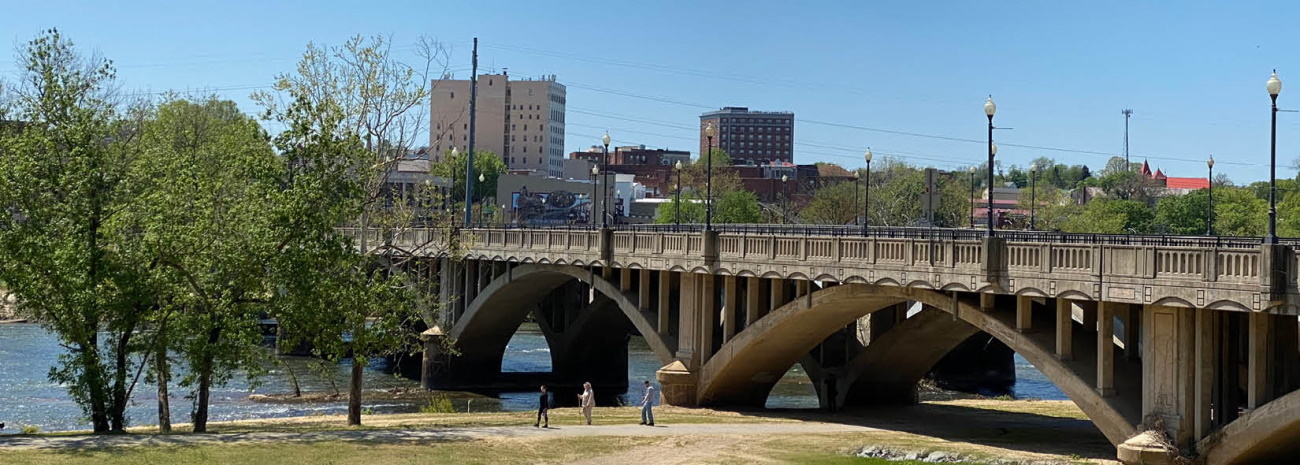
For more than a century, Danville was the economic powerhouse of south-central Virginia, based on the strength of its textile manufacturing industry and its tobacco growing and processing sector. But automation and low-cost overseas competition decimated employment in the US textile industry, eliminating 62% of jobs from 1950 to 2000. Beginning in the 1990s, the anti-smoking crusade shrank the number of Virginia tobacco farms from 6,000 in 1997 to only 300 in 2017.
What followed was both predictable and grim: textile mill closings, a sharp economic decline and out-migration of the labor force that drove local businesses under and left behind an aging population living on pensions and Social Security payments. It was a story repeated in rural place around the world – one that seemed to offer no hope for the future.
More in Accelerate Your Economic Development
Assets and Priorities
Danville may have been down, but it was by no means out. The city’s economic history had created a low-skilled workforce – but one with a legacy of manufacturing experience that might, someday, be of value. The city was also home to a university and community college that offered both academic and career-focused fields of study, and under-utilized industrial parks that nonetheless offered available space for investment. There was also a high-value asset hiding in plain sight: the city-owned electric company, Danville Utilities. Like government-owned rural utilities across the US, it was the legacy of electrification in the first decades of the 20th Century, when for-profit companies bypassed rural areas in favor of the more profitable cities and local governments took on the job of building out the electric grid.
Crisis has a way of focusing the mind, and Danville’s government and business leaders were determined to revive their remembered prosperity. From their work gradually emerged clear priorities. They needed to bring Danville a broadband network that could meet the new needs of business and residents. The city required programs for young and adult learners to equip them with skills and knowledge for today’s economy. Industries had to be targeted for relocation and entrepreneurs for startups through business attraction, support and retention programs.
Technical and Human Infrastructure
Turning priorities into achievements demanded money. Here, Danville benefited from an aftereffect of tobacco’s decline. In 1998, attorneys general from multiple US states reached an historic settlement with the major tobacco companies. It resolved lawsuits seeking reimbursement for the cost of treating tobacco-related illness – and produced billions of dollars in annual payments to states. To put the money to work, Virginia formed a Tobacco Commission.
Local determination and Tobacco Commission funding combined to spark a wave of change for the city. Danville Utilities had already built the nDanville fiber network in 2004 to serve the needs of government. In 2007, the utility opened it to serve as a middle mile for commercial ISPs bringing service into the community. The economic success of that move led the company to build out a fiber-to-the-premise network of its own, which eventually expanded to 165 miles (264 km) to serve subscribers across the county.
The city’s public schools ploughed Tobacco Commission funding into educational technology and learning labs for robotics and CAD systems. Partnering with Danville Community College, the schools introduce a STEM curriculum and established a magnet school for advanced learners and a career education center to guide students into employment. Meanwhile, the community college launched its own advanced manufacturing training center teaching skills in robotics, factory automation and electronics. By 2011, 73% of high school graduates were choosing to pursue higher education.
Strategic Successes
 These achievements accelerated economic transformation. During the pandemic years, Danville was on the receiving end of US$1.1 billion in private investment commitments, many in advanced manufacturing. The money went into its industrial parks and helped found a new Cyber Park for digital industries. The city also partnered with local businesses and county government to establish, using yet more Tobacco Commission funding, an incubator called The Learning Place offering pitch competitions, consulting and seed funding to entrepreneurs. All these developments leveraged one more hidden advantage among Danville’s assets: a one-hour drive time to the Raleigh-Durham Research Triangle cluster in North Carolina, allowing the city to attract Triangle companies, employees and entrepreneurs with its much lower cost of living and easier lifestyle.
As the local economy returned to growth, out-migration eased, then reversed. The city began redevelopment of its downtown River District to convert long-abandoned textile mills into lofts and trendy apartments for incoming young workers. Investment announcements – including a 30-year project to develop a US$100 billion data center campus – have led Site Selection magazine to twice name Danville as one of the top 10 “micropolitan cities” in the United States. From near-death, Danville applied the principles of what is now the Community Accelerator Strategy to power its rebirth and to continue adapting to a global economy that refuses to stand still.
Population: 42,000
Website: www.danville-va.gov
Smart21 2010 | 2011 | 2012
Dakota County, Minnesota

Stretching from the Minneapolis border in the north to rural areas in the south, Dakota County has been an economic success story. Since 1990, it has grown a diversified economy in manufacturing, information technology, food, energy and chemicals, and has seen its population grow by 45%. But the success formula of the past two decades has gradually lost its power. The county's best available building sites are occupied, and the multinational companies that are its biggest employers have downsized local employment. Dakota Future, a county-wide economic development organization, has responded by driving its members and partners to take a more proactive approach to their joint future. The county is generally well-served with commercial broadband, but coverage in less populated areas lags the region's cities.
The county is now speeding planned fiber build-outs that serve county, local government and school district needs. It is also coordinating the network projects of local government and making unused fiber assets available to the private sector to motivate expanded wired and wireless coverage. In education, the county is well-served by community colleges with innovative technology programs, and local school districts are now collaborating with them to increase STEM education in the K-12 grades. The county's most intriguing effort is the Dakota Future Innovation Network. Because the county's economy is so diverse, few companies interact regularly and share information and best practices with their peers. The Innovation Network establishes cross-industry networks in such areas as advanced computing and lean industrial processes, and organizes regular meetings that combine education and person-to-person networking. The goal is to consciously replicate the kind of effects that happen naturally in industrial clusters, and to do it across diverse industries. If it is successful, this quiet effort could have transformative effects across Dakota County.
Population: 398,500
Website: www.dakotafuture.com
Smart21 2011 | 2012
Corpus Christi, Texas

Photo: Corpus Christi skyline by Quintin Soloviev, via Wikimedia Commons. Licensed under CC BY 4.0 .

Located on the Gulf Coast of South Texas, Corpus Christi is a major coastal city whose economy is shaped by maritime commerce, industry, tourism, and its strategic location along the Gulf of Mexico. The city has long recognized the importance of infrastructure and connectivity in supporting economic growth and improving public services.
In 2007, Corpus Christi was named one of the Intelligent Community Forum's Smart21 Communities for its ambitious deployment of a citywide wireless broadband network. Designed to provide 1 Mbps connectivity across the entire city, the network was expected to support a range of applications, including electronic government services, digital educational resources, and greater participation by local businesses. This early investment demonstrated the city's recognition of digital infrastructure as a foundation for community development.
Today, Corpus Christi continues to pursue improvements in municipal technology, long-term planning, and economic development, with initiatives aimed at strengthening public services, supporting investment, and preparing the city for future growth.
Technology and Digital Infrastructure
Corpus Christi's Information Technology Department supports municipal operations through a broad range of digital services, including hardware and software management, cybersecurity, geographic information systems (GIS), and application development and analysis. The department's specialized teams manage technology infrastructure, public safety systems, network security, and digital applications used throughout city government.
The city's technology operations also include Supervisory Control and Data Acquisition (SCADA) systems, which support the monitoring and management of municipal infrastructure. Together with GIS capabilities and cybersecurity services, these systems provide a technological foundation for more effective public administration and infrastructure management.
Economic Development and Community Planning
Corpus Christi's Planning and Economic Development Department coordinates the city's long-term development through comprehensive planning, neighborhood plans, area development plans, and infrastructure planning. Its work seeks to guide growth while balancing economic opportunity, community needs, and the preservation of local character.
The city's comprehensive planning framework, known as Plan CC, provides direction for future land use, transportation, neighborhood development, and public investment. Through area-specific planning initiatives, Corpus Christi addresses the different needs of its commercial districts, residential neighborhoods, coastal areas, and industrial corridors. The city also maintains economic development programs and partnerships intended to encourage business investment and support continued economic activity.
Building a More Connected and Accessible City
In February 2026, the Corpus Christi City Council approved the Padre/Mustang Island Mobility Plan for incorporation into Plan CC, establishing a framework for future transportation improvements in the city's island communities. The plan examines existing transportation conditions and identifies opportunities to improve connections between residential neighborhoods, commercial areas, and other activity centers.
A central focus of the plan is expanding transportation options beyond traditional automobile travel. Recommendations emphasize safer and more connected routes for pedestrians, cyclists, golf cart users, and water travelers, with the goal of improving accessibility while preserving the character of Padre and Mustang Islands.
The initiative reflects Corpus Christi's broader approach to long-term community planning, integrating mobility, safety, sustainability, and quality of life into decisions about future infrastructure investment.
Population: 270,000
Website: www.cctexas.com
Smart21 2007
Columbus, Ohio

Columbus is a city of sharp contrasts. The capital of the state of Ohio, it has the highest metropolitan concentration of Fortune 1000 companies in America and is the home of the research school Ohio State University (OSU) and Battelle, the world’s biggest private research institute. But the city also has a large, low-income population stranded by the decline of low-skilled factory employment and is ranked 46th out of the 50 largest US cities for upward mobility. As a result, average per-capita income trails America’s and its employers struggle to find qualified staff while unemployment and low-wage jobs afflict too many citizens.
Municipal Broadband Attracts Competitors
 Columbus is attacking these challenges on multiple fronts and through collaboration among government, education, business and institutions. It is also leading a regional approach to economic development with surrounding communities including former Top7 Dublin. The collaboration plays out in broadband, where the partners have interconnected their fiber networks supporting schools and universities, hospitals, research institutes and government facilities. This continuing investment in advanced broadband has helped attract multiple competing commercial providers as well as enabling a unified traffic management system and mobile solutions for the city workforce including first responders.
Educators meanwhile are collaborating to improve the chance that low-income students can afford higher education and also succeed at it. The Central Ohio Compact unites K-12, community college and undergraduate institutions to guide low-income students into higher education. Preferred Pathway is one program that guarantees community college graduates a university placement, which lets them turn their 2-year degree into a 4-year degree at a fraction of the normal cost. City government supports this effort with programs including Capital Kids, which provides after-school digital literacy programs for K-12 students, and APPS, which works to give at-risk youth positive alternatives to being on the street, including computer labs funded by Microsoft.
From Brain Drain to Brain Gain
Another partnership, TechColumbus, offers startup acceleration, business mentoring, seed funding and capital attraction. Its First Customer program helps young companies generate their first revenue from established companies in the region.
The East Franklinton neighborhood was once the heart of a vibrant African-American cultural scene and Mayor Coleman has made its revitalization a personal crusade. A community-based planning effort has created a vision for building residential, retail and creative space as well as a business incubator, and private investment has already converted an abandoned warehouse into a performance and studio space supplemented by an art gallery, coffee shop and farmer’s market. Grant funding is going into the development of a makerspace and community workshop.
My Columbus
Go to the App Store on the iPhone or Android and search for MyColumbus. Downloading this app (rated 3.5 out of 5 by users as of June 2012) will put the City of Columbus, Ohio, USA into the palm of your hand.
MyColumbus started out as a student project at Ohio State University. Students worked with the IT department of the city to identify open-data databases that could provide the most up-to-date information on city services, location of facilities and schedules of public events. They then built an app to access the data and turn it into easy-to-understand information. The city’s IT department was so impressed with the result that, with the students’ permission, it hired a software company to expand the app and put a professional gloss on it.
The resulting MyColumbus provides MyNeighborhood (location-based mapping and information about community resources, refuse collection and health inspections), GetActive (links to events, bike and trail guides and healthy lifestyle tips), GreenSpot (with information on sustainability) and 311 (where residents can log service and information requests). Service requests submitted via MyColumbus are resolved 3.3 times faster, on average, than telephone requests. Why? Because users can submit photos and GPS coordinates with their service requests, which helps maintenance workers show up with the right tools and materials to get the job done.
MyColumbus is so effective because of the rich data that Columbus’s IT department makes available to it. The city’s geographical information system (GIS) has hundreds of layers and supports applications including One-Stop-Shop Zoning, Utility Dashboard, Capital Improvements Planning, Fire Hydrants Inspection/Maintenance, and that all-important function in snowy southern Ohio, Snow Removal. The data derived from databases, sensors and GPS flows through to operations managers, planners, businesses and citizens in a never-ending stream.
This range of programs and applications enabled Columbus to succeed beyond its dreams. From 2000 to 2017, Columbus added almost 400,000 people to its population and nearly 164,000 new jobs to the region. The region has attracted data centers, a new Intel semiconductor plant and the largest solar manufacturing facility in central Ohio. The city is home to one of the Midwest’s largest venture capital funds and a workforce in which 36 percent have a higher education degree. With rust firmly in its past, Columbus is now working hard to manage the challenges that come with economic success.
In the News
Read the latest updates about Columbus.
Want to know more about Columbus?
Columbus was featured in the Intelligent Community Forum book Brain Gain.
Population: 907,970
Website: www.columbus.gov
Intelligent Community of the Year 2015
Smart21 2013 | 2014 | 2015
Top7 2013 | 2014 | 2015
Columbus Region, Ohio

The Columbus Region is centered on Columbus, the state capital, and includes five surrounding suburbs and cities, of which one – Dublin – has been a Top Seven Intelligent Community for the past two years. A complex region, Columbus contains urban and rural areas, a wide range of income levels, highly-rated universities and colleges as well as traditional industries, from automotive to logistics, which are undergoing severe stress. Fostering tech startups and attracting innovative employers is crucial to its future, but the region has historically been challenged to commercialize its R&D output. It has also seen its per-capita income erode over the past decade as job creation favored low-skill, low-value occupations. The trend has affected not only family income but the public-sector budgets that depend on income tax revenue as well.
The Columbus Region attacked these challenges through partnerships bridging across government, business and university sectors. Columbus Mayor Michael Coleman convened a Broadband Retreat that led to development of the first Broadband Strategic Plan for the city, which led to a doubling of the city's fiber network in less than four years. Regional institutions and the governments of surrounding cities made their own fiber investments to support government operations, education and R&D. The first regional economic development plan, Columbus 2020, set a goal of adding 150,000 new net jobs and increasing per-capita income by 30% by 2020. The region's signature innovation was TechColumbus, a public-private organization that identifies and fosters intellectual property from the region's leading schools and institutions, incubates new companies, and connects them to seed and venture capital. Since 2007, TechColumbus has engaged more than 1,400 entrepreneurs and invested $17 million in startups. These companies in turn have generated over $320 million in revenue, raised more than $400 million in additional capital and created over 1,300 jobs with salaries 44% higher than the average wage.
Population: 1,800,000
Websites: www.columbus.gov | www.techcolumbus.org
Smart21 2012