Communities do not become innovation leaders by chance. They become innovation leaders through intentional choices about where they invest, who they partner with and what future they are preparing for.
 Throughout its history, Durham Region has demonstrated a willingness to look beyond immediate needs and invest in opportunities that will shape the decades ahead. From broadband and transit to clean energy and innovation infrastructure, Durham's approach has been intentional and guided by the future its community aspires to be.
Under the vision of Connected Communities. Connected to You., Durham Region is making investments that align with its strategic plan and strengthen connections between people and opportunity, businesses and talent, and communities and the services they rely on. These investments are helping create a region that is more competitive, more sustainable and better prepared for the future.
This approach has helped position Durham as one of Canada's fastest-growing regions and contributed to its recognition as the 2025 Intelligent Community of the Year by the Intelligent Community Forum (ICF).
Building the digital backbone
 Like many communities across Canada, Durham Region faced broadband gaps that risked limiting economic opportunity, innovation and access to services. What set the Region apart was its response. Recognizing that connectivity would be critical to future competitiveness, regional leaders created Durham OneNet, a municipally owned corporation tasked with building the digital infrastructure needed to support residents, businesses and institutions across the region.
Today, Durham OneNet is on track to complete 600 kilometres of its planned fibre network by the end of 2026, creating the backbone for broadband expansion, public-sector connectivity and future smart community applications. By creating infrastructure that can be shared by internet service providers, municipalities and public agencies, Durham Region has helped establish the digital foundation needed to support economic growth across the Region’s eight municipalities. More than 2,100 residents in 14 rural communities now have access to high-speed Internet.
The network has also expanded high-speed connectivity to key employment areas helping businesses grow, attract investment, and compete in the digital economy. Durham OneNet is now expanding fibre infrastructure to industrial areas south of the Highway 401 corridor, one of North America's busiest transportation corridors, replacing aging infrastructure and supporting future economic development.
Planning for growth before it arrives
The same principle can be seen in Durham Region's approach to transportation. More than 20 years ago, the Region brought together a collection of municipal transit systems into a single regional network, recognizing that residents' lives, commutes and opportunities do not stop at municipal boundaries.
 As Durham has grown, so too has its approach to mobility. Through On Demand transit, residents in rural and lower-density communities can access transit services regardless of where they live, helping ensure that access to jobs, education, health care and community services is not limited by geography.
Looking ahead, Durham Region faces a challenge shared by growing regions across North America: population growth cannot be accommodated by simply adding more cars to the road. With limited space to expand major transportation corridors, the long-term solution is providing more people with reliable transit options.
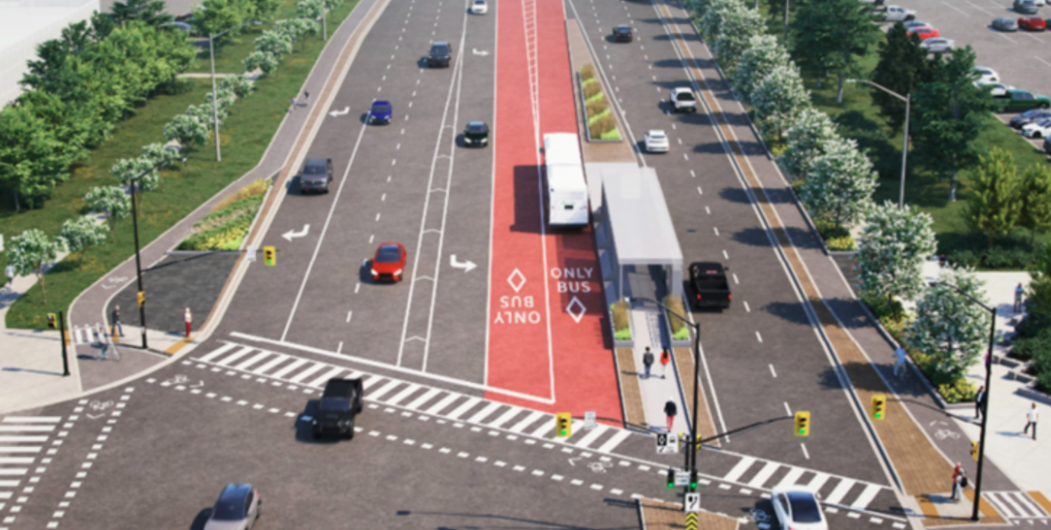
That vision is driving investments such as the Durham-Scarborough Bus Rapid Transit (DSBRT) project. Spanning approximately 36 kilometres, the corridor will connect Oshawa, Whitby, Ajax, Pickering and Scarborough with frequent five-minute peak service, dedicated bus lanes and signal priority measures, while reducing travel times by up to 20 minutes along the corridor by 2030. More than a transportation project, DSBRT is infrastructure designed for the economy the Region is building, connecting people to the jobs, education and opportunities that fuel future growth.
Building sustainability into growth
Durham Region's approach to sustainability recognizes that building a low-carbon future requires action on two fronts: improving the communities that exist today while planning for the communities of tomorrow.
Through programs such as Durham Greener Homes, residents are supported in making energy-efficient and weather-ready upgrades that lower emissions, reduce energy costs and prepare for extreme weather. This investment helps address important barriers including upfront costs, complexity and access to trusted information. The program provides expert home energy coaching, in-home assessments and delivers low-interest financing to support retrofits.
At the same time, the Region is looking decades ahead.
As plans advanced for a future Transit-Oriented Community in Courtice, Durham Region and the Municipality of Clarington recognized a rare opportunity. Rather than retrofitting energy infrastructure after development occurs, they could design a low-carbon energy system from the ground up.
The result is the proposed Courtice District Energy System, which would provide low-carbon heating and cooling to future homes and businesses while supporting economic development and energy innovation. By planning a district energy system alongside a community expected to accommodate approximately 33,000 residents and 8,000 jobs, the system has the potential to reduce emissions by more than 70 per cent compared to business as usual, while also supporting energy security and affordability objectives.
Innovation without boundaries
One example of Durham's evolving innovation ecosystem is Ontario Tech University's ACE Research and Testing Facility.
 Originally established in 2011, ACE is a world-class research and testing facility designed to deliver accurate, repeatable, real world climatic conditions located on the campus of Ontario Tech University in Oshawa, Ontario. ACE’s facility offers unique, industrial-scale testing capabilities, supported by a team of expert engineers and technicians.
“The ACE environment can re-create any weather condition a test object will experience anywhere in the world, from the blistering heat in Death Valley to the frigid conditions in the Arctic.”
-
Ontario Tech University
ACE brings together researchers, students and industry partners to bring innovation to life. Since opening, the facility has evolved to support research, testing and innovation across a range of sectors, including the Automotive and Mobility sector, Aerospace, Defence and Dual-Use, Civil and Architectural Engineering, Energy and Hydrogen, Academic Research, as well as product development, film and television production and human performance. Researchers, entrepreneurs and industry partners use ACE’s specialized facilities to explore emerging technologies, accelerate development and address increasingly complex challenges.
Building on ACE’s research and testing capabilities, the Durham Region Innovation and Vehicle Ecosystem (DRIVE) was recently launched. As Durham’s Regional Technology Development site (RTDS), DRIVE supports automotive mobility SMEs by connecting them with advanced world-class resources, including access to Ontario Tech’s ACE facility, municipal pilot opportunities, industry experts, designated workspaces and targeted accelerator programming.
Through Ontario Tech's participation in DRIVE, Durham Region can help start-up companies and growing businesses access specialized facilities, expertise and resources that may otherwise be out of reach. Together, Ontario Tech, along with other organizations in Durham Region, and DRIVE are helping strengthen the region’s innovation ecosystem and create new opportunities for businesses to develop, test and advance emerging technologies.
Creating lasting value
Delivering transformational infrastructure requires more than funding and construction. It demands long-term vision, sustained collaboration and a willingness to invest in outcomes that may take years or decades to fully realize. By bringing together municipalities, educational institutions, businesses, utilities and community partners around a shared vision, Durham Region has built assets that continue to evolve alongside the region's economy and create value far beyond their original purpose. This intentional, future-focused approach has become a defining strength, positioning Durham Region to meet today's needs while preparing for the opportunities of tomorrow.
Durham Region's experience demonstrates that infrastructure is most powerful when it is viewed as a catalyst rather than a construction project. From transformational transit projects and a regional broadband network, to future energy systems and innovation hubs, across the region consistent investments in foundational infrastructure continues to create better opportunities for residents, businesses and the communities served.
About this series: Durham Region was named the 2025 Intelligent Community of the Year by the Intelligent Community Forum, recognizing the Region's collaborative approach to innovation, workforce development and community building. Through this three-part series, discover how the region’s governments, businesses, educational institutions and community partners are working together to create opportunities for residents and build a more connected, sustainable and prosperous future.
