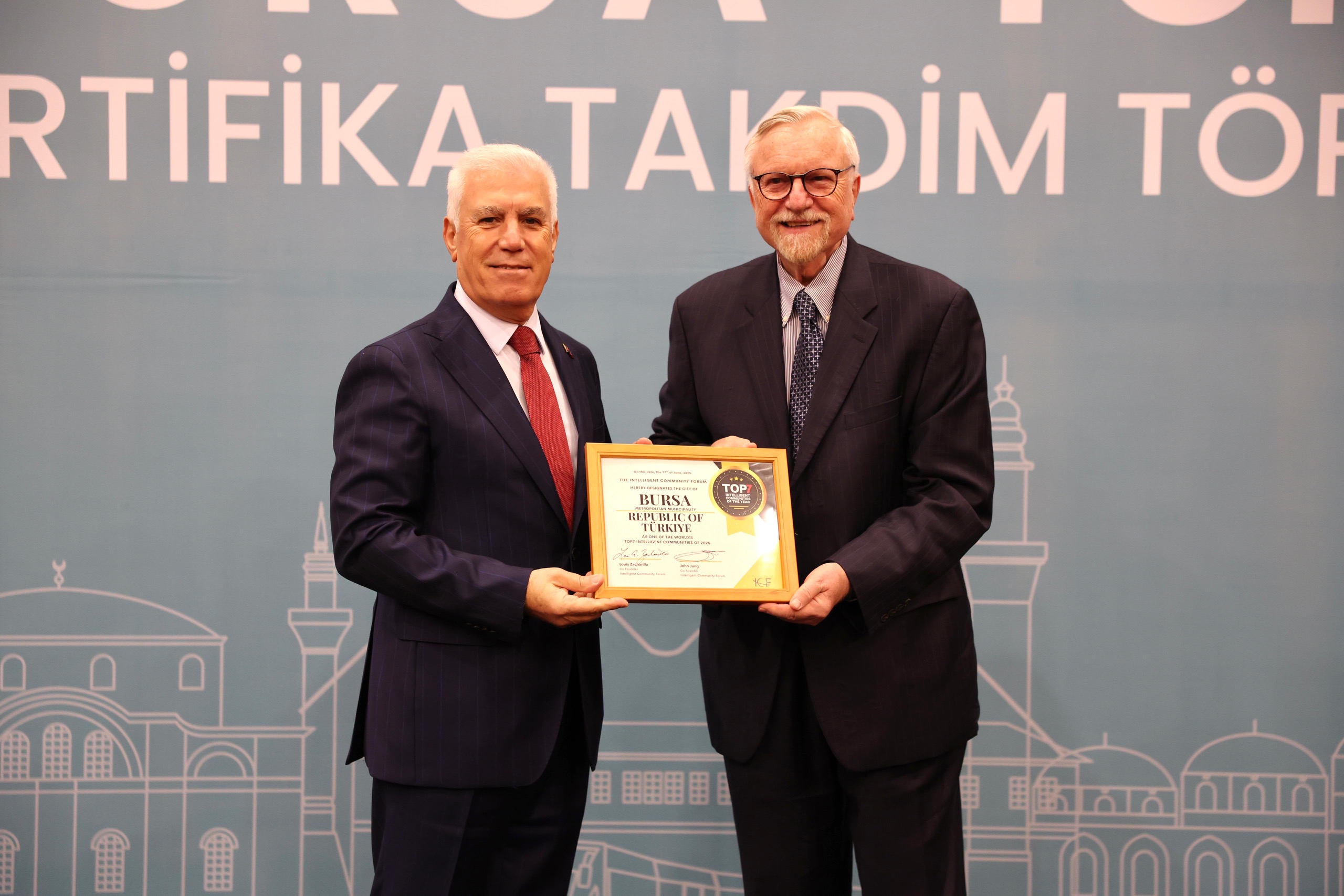
 Bursa Metropolitan Municipality is the first TOP7 Intelligent Community in Türkiye. Izmir and Konya Metropolitan Municipalities have met ICF’s Smart21 level, but Bursa has successfully leapt forward, and in its first year of applying, has impressed the adjudicators to make it to the 2025 TOP7. I was interested in finding out how this happened and undertook the site visit as this year’s TOP7 auditor to Bursa. I am glad I did. I was thoroughly impressed. Bursa’s leaders are proud that their community was the first capital of the Ottoman Empire and the terminus of the Silk Road. It is a double UNESCO World Heritage community, has had an amazing growth trajectory as an industrial leader, and is seeking to become a world leader in innovation and sustainability through its transition into a digital ecosystem. But they do not dwell on the past nor ignore it.
As ICF’s two-part podcast interview with Demet SİNMEZ, Branch Manager for Smart Urbanization in the IT Department of Bursa Metropolitan Municipality, pointed out, “digital urbanism in Bursa does not mean erasing the past, but rather bringing the past and the future together.” Despite their massive urban development from around 200,000 population to over 3.3 million in the past 5 decades, they have worked hard to preserve their history, culture, and values while recognizing the need to build a resilient and sustainable future for their citizens by building a robust and citizen-centered digital foundation for their expansive metropolitan municipality.
Bursa had long been a center of commerce and craftsmanship, especially known for its strategic location and rich heritage in silk and other textiles, ceramics, knives, and agricultural products. However, over the past several years, it has leveraged its growth to build a forward-looking vision based on digital transformation, inclusive urban development, and sustainability. Today, Bursa harbors a dense network of SMEs and export-driven production strengths to complement the city’s dynamic and evolving economy, focusing on global automotive manufacturers such as Stellantis and Renault, and advanced industries in machinery, textiles, and food. Bursa’s leadership is cognizant of the environmental degradation resulting from its massive industrialization since the late 1960s. Accordingly, they have become focused on resilient and sustainable green transition policies and smart production practices. Throughout my visit, my hosts pointed to their commitment to their shift to actions that demonstrate sustainability, resilience, lifelong learning, cultural heritage, and social inclusion. Its new smart city strategy integrates digital infrastructure, open data platforms, AI-supported decision-making, and environmental monitoring technologies.

Bursa was open to discussing their challenges, including issues arising from rapid urbanization, mixed with the potential for earthquake disasters, the impacts of climate change, and the inequities resulting from the digital divide, such as youth unemployment and opportunities for women. I observed how the community is embracing an integrated and human-centered approach focused on data-driven governance, innovation-oriented solutions, learning from global best practices, and undertaking multi-stakeholder collaboration. I heard several speakers mention that they view technology as a strategic tool to help optimize their local resources and achieve the best quality of life possible for their citizens. Ultimately, Bursa’s goal is to lead with its manufacturing strength in Türkiye while transforming to become a resilient, inclusive, and intelligent community prepared for the future.
You can learn more from Lou Zacharilla’s interview with Demet SİNMEZ. Listen to Part 1 here, and Part 2 here.
