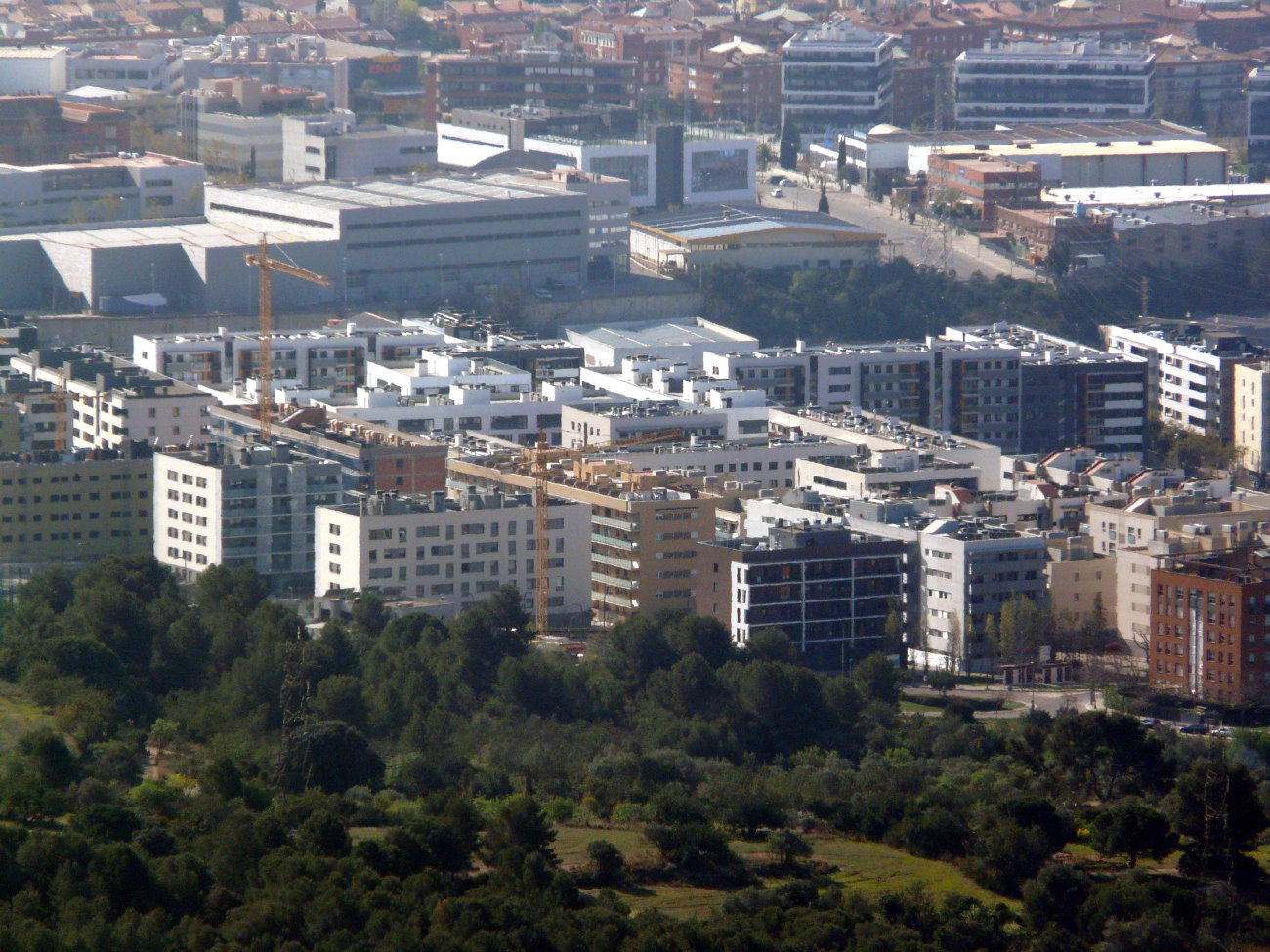
Sant Feliu de Llobregat is a municipality of 46,381 residents located just 10 kilometers west of Barcelona, where it serves as the capital of the Baix Llobregat county and a strategic urban hub within the Barcelona Metropolitan Region. Nestled between Collserola Natural Park and the fertile Llobregat Agricultural Park, more than 65% of its 11.9 km² territory is preserved as protected land, reflecting a deep commitment to sustainability and ecological balance. Far from being a simple suburb, Sant Feliu functions as a territorial hinge – linking agricultural landscapes with industrial zones, and historic heritage with modern innovation – while benefiting from direct access to Barcelona’s port, airport and metropolitan transit networks. With a history stretching from Paleolithic settlements and Roman villas to a modern industrial and service economy rooted in metalworking, pharmaceuticals, textiles and logistics, the city has continually reinvented itself. Today, Sant Feliu combines its civic spirit, cultural vitality and economic diversity to position itself as both a gateway city and a forward-looking community balancing tradition with transformation.
Wifi4EU Breathes New Life into an Unconnected Community
After identifying rising community needs such as students unable to study from home, seniors excluded from e-services and small businesses operating without reliable access, Sant Feliu de Llobregat secured a €15,000 European Commission WiFi4EU grant and matched it with municipal funds. The €21,473 project – spearheaded by the Department of Information Systems, in partnership with the Departments of Strategic Planning, Municipal Facilities Management and the Sant Feliu 2020 Office and implemented by SINTELEC Informatica SL – installed 17 high-speed WiFi points across strategic public spaces such as markets, sports centers, parks and civic squares. Offering 1 Gbps bandwidth, the system was designed with principles of inclusivity and trust: no tracking, no advertising, no login barriers, multilingual access and EU-compliant privacy protections.
Since going live in early 2023, WiFi4EU has become a catalyst for social, cultural and economic vitality across the city. In neighborhoods like Can Nadal, children now complete homework in connected parks, while seniors use the service to access doctors, public services and family. Libraries and community hubs have reported increased foot traffic as residents tap into e-learning and job portals, while youth groups use the connectivity to co-create content and launch entrepreneurial projects. The network has also enabled public events, such as the CO-Innova tech showcase, where a live SIMracing eSports demo highlighted both the capacity and the creativity the system supports.
Building a Culture of Cooperation, Innovation and Entrepreneurship
Sant Feliu de Llobregat is committed to nurturing innovation and entrepreneurship through a carefully designed ecosystem of programs and partnerships. The city has created an initiative called Learn UP Sant Feliu! to build digital literacy and lifelong learning pathways for residents, ensuring that citizens of all ages and backgrounds can adapt to a rapidly evolving technological landscape. To complement this, the PowerUP initiative provides entrepreneurs with mentorship, technical support and business resources to accelerate the growth of startups and small enterprises. The city also fosters co-creation through PowerUP JAM Sant Feliu, a collaborative platform where students, entrepreneurs and creative professionals develop innovative projects together, strengthening a culture of open experimentation and civic problem-solving.
Citizen participation is also central to Sant Feliu’s innovation strategy. The Citizen Innovation Community functions as both a network and a learning platform, bringing together residents, civic associations, schools and local businesses to co-design solutions to urban challenges. Through workshops, open calls and participatory labs, members test prototypes, share knowledge and influence municipal projects, turning citizens into active stakeholders rather than passive beneficiaries. This community is also a key node in the Motor Group of the Collaboratori Catalunya, enabling Sant Feliu to exchange practices and scale innovations regionally. Another program, TERRITORIS CREATIUS, which transforms public spaces into creative and social hubs, further reinforces this civic-first approach.
In recent years, Sant Feliu has crystallized its innovation vision into a three-pillar model that integrates Building Information Modeling (BIM), the Sant Feliu Innova lab and the Electronic Processing Assistant. Since 2014, BIM has expanded into a citywide digital twin system covering 33% of municipal building stock, achieving cost savings of up to 40% while reducing emissions and modernizing facility management. At the Torre del Roser, Sant Feliu Innova has become a civic innovation engine, hosting programs like Aplic_IA, which has incubated over ten AI-driven civic tech startups in partnership with universities and private investors. Meanwhile, the Electronic Processing Assistant ensures inclusivity by offering live multilingual support for navigating digital services, reducing exclusion for seniors, migrants and small entrepreneurs.
Making Citizen Feedback the Key to Public Improvement
In alignment with the Spanish Urban Agenda Action Plan, Sant Feliu de Llobregat has developed strategies to promote sustainable urban development and improve quality of life for its residents by requesting their participation and feedback. A cornerstone of this approach is the Decidim Sant Feliu platform, an interactive online tool that facilitates participatory processes and broadens access to municipal decision-making. Beyond simply posting comments, citizens can propose initiatives, participate in surveys and follow the development of key projects in real time. The platform was central to the Underground Railway Project, a transformative initiative designed to remove the barrier once created by surface railway tracks. Through Decidim, nearly 2,000 residents engaged with the process, contributing 1,418 comments and proposals, many of which were directly incorporated into the project design. This not only expanded inclusivity, giving voice to residents who could not attend meetings in person, but also strengthened community trust in how the city plans and executes large-scale projects.
To further enhance dialogue between residents and local government, the City Council has established the Citizen Experience space, a physical and virtual forum where residents can provide feedback and gain access to information about municipal services. Complementing this, the Seu Electrònica functions as the city’s electronic headquarters, streamlining administrative processes while promoting transparency in governance. Together, these platforms were integrated into a comprehensive engagement strategy for the Underground Railway Project, which included in-person and virtual informational sessions, guided “paseadas” (walking tours) through impacted neighborhoods, and a regularly updated digital newsletter to keep residents informed. The government also created a dedicated participatory body – the Ponència Unitària del Soterrament – to bring together representatives from all municipal groups to ensure democratic oversight. These combined efforts resulted in high community participation, strengthened trust in public institutions and broad citizen approval for one of the city’s most ambitious infrastructure undertakings.
A Bold Urban Green Transformation
Sant Feliu de Llobregat is pursuing an urban green transformation that unites large-scale infrastructure renewal with grassroots environmental action. At the center is the €120 million Railway Burial Project, scheduled for completion in 2026. The project will bury the railway line that has divided the city for decades, eliminating a dangerous level crossing used by more than 10,000 pedestrians daily and freeing land for over 10 hectares of new green and public spaces. Beyond enhancing safety and reconnecting neighborhoods, the project will increase rail capacity on the R1 and R4 lines, reduce congestion and pollution and create pedestrian pathways, bike lanes and parks that promote healthier, more sustainable mobility. Community participation has been vital to the process, with over 200 residents contributing ideas through workshops, surveys and walking tours, ensuring that the design reflects local needs and aspirations.
Complementing this flagship initiative, Sant Feliu has expanded its network of green spaces and strengthened ecological resilience through tree planting, park creation and sustainable mobility programs. The city has increased green areas by 12%, surpassing World Health Organization recommendations for per capita access, and mobilized over 150 volunteers to maintain community gardens and urban green zones. More than 400 residents have taken part in environmental education workshops, fostering a culture of stewardship and sustainable practice. At the same time, the city has made investments in electric vehicle charging infrastructure and shared e-bike and moped services to cut emissions and support the transition to clean mobility. Together, these efforts are reducing air pollution, boosting biodiversity and mitigating the urban heat island effect, while enhancing social cohesion, raising property values and creating a more resilient and livable urban environment.
Population: 46,056
Website: santfeliu.cat
Smart21 2025
Showing 1 reaction