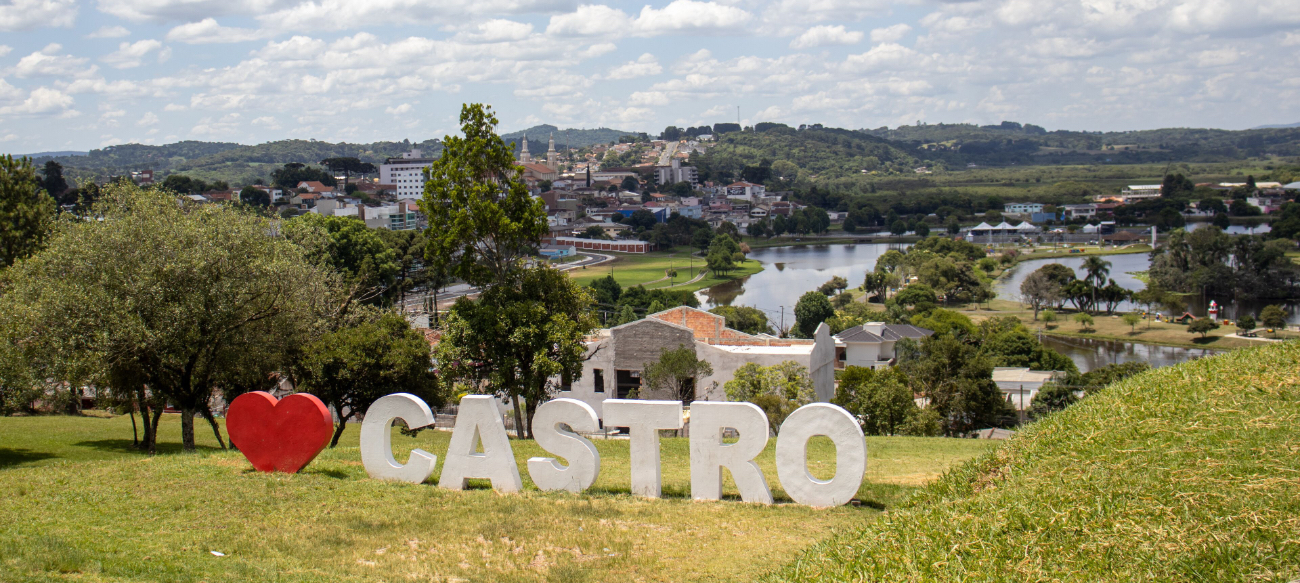
 In the 18th Century, Brazilian muleteers, known as tropeiros, began driving long mule trains carrying tools, food and manufactured goods to the mining camps of the Brazilian gold rush. The mules’ cargo changed as gold played out and coffee-growing boomed in the 19th Century – but not the storied ways of the tropeiros. It was the spread of railroads across Brazil that finally brought their travels to an end. Their stories, however, live on at Casa da Sinhara, the Tropeiro Museum in the city of Castro, which honors the city’s role as a stopping place on their routes.
Today, this city of 75,000 is known as the ‘National Capital of Milk’ for its role in the dairy industry of southern Brazil. Castro hosts the annual Agroleite exhibition, one of the country’s largest dairy shows, which welcomes 120,000 visitors each year to technical panels, machinery demonstrations and forums highlighting innovations in animal care and dairy production. It is a symbol of Castro’s ability to turn traditions into a foundation for progress. Another more recent symbol is Castro's Provisional Certification as an Intelligent Community, which made it the first community to achieve Certification without first gaining Smart21 Community recognition in the Intelligent Community Awards program.
Fiber and Wireless
Castro lies in farming country about 160 km from Curitiba, the state capital and ICF’s 2024 Intelligent Community of the Year. In the city core, up to 85% of homes and businesses have access to fiber-optic connectivity from national and local ISPs. But outlying areas are not so well served. Castro is investing in significant expansion of Wi-Fi to municipal schools, healthcare centers and public parks, and pairing it with teacher training in the use of digital technologies. It coordinates with a Paraná state program that is building hundreds of communication towers to extend the range of wireless connectivity.
Building an Ecosystem
Agricultural economies around the world struggle with retaining their youth, who find the lure of urban opportunity hard to resist. Castro has programs in operation and development to open the eyes of young people to appealing local careers. An “Ideathon” engages students in a competition to develop innovative and sustainable solutions for dairy farming, which have the potential to become viable businesses. Awardees receive technical counseling, mentoring support and introductions to the agribusiness community.
Rather than pursue a disjointed collection of projects, the city is establishing the legal and institutional framework for a comprehensive innovation ecosystem connecting government, industry and institutions. At its heart is a new Municipal Council for Science, Technology and Innovation that will allocate funding to buy technology, develop innovation centers and modernize public services.
The success of the Agroleite exhibition offers an opportunity for further development, and Castro is seizing it with a planned Agroleite Technology Park to rise next to the exhibition fairgrounds. An agreement signed between the city and Paraná state will bring together universities, companies and startups for applied and technology research to enhance agricultural productivity. An accompanying vocational training center will increase the pool of skilled labor available to the dairy industry.
Intelligent Engagement
As these projects move forward, Castro is revamping how it engages its people in governing. The goal is to increase civic participation by improving transparency and accountability. The new Council for Science, Technology and Innovation sees this greater participation as crucial to its success, but the transparency and accountability mandate extends to social issues including the rights of women and people with disabilities as well. As the City Council amends laws in all these areas, Castro is building a digital platform to enable citizens to submit public service requests for such things are pothole repair, street lighting and sanitation, monitor their status and interact with municipal authorities.
The city is also anticipating growing demand for digital skills among workers and the general public. An Innovation Truck is equipped with computers, satellite internet and multimedia resources is providing free training in digital applications. It visits such popular events as the Agroleite exhibition to gain public attention and bring educational opportunities closer to the people. Castro has also joined forces with a mobile carrier to begin training older adults in smartphone use and safe internet navigation. A joint city-state program has expanded Wi-Fi connectivity in public schools and made laptops and tablets available to most students in the system.
Green Savings
New programs in sustainability have focused on reducing waste going to landfills and finding lower-cost and sustainable sources of energy to power the city’s growth. The city faces two challenges: low recycling rates and persistent food insecurity among vulnerable populations. It is combating both with a program that provides needy residents with food produced by local family farmers in exchange for their recyclables.
As recycling volumes increase, a pilot project is expanding waste separation to up to 300 material categories, which offers the potential to reduce up to 90% of waste currently sent to landfills while creating new employment opportunities. The city also has a solar power plant under construction on public land, which will power its operations while fostering public awareness of green energy and sustainability
Plans and Outcomes
Most of the Intelligent Community programs that Castro has put in place were launched in 2024 or 2025. Most, especially those involving infrastructure, are in development and have yet to deliver results. Even so, it is the structure and comprehensiveness of plans and programs that make Castro stand out as a city on the move and one of the many Intelligent Community innovators rising in agricultural economies around the world.
Population: 75,000
Website: https://castro.atende.net
Showing 1 reaction