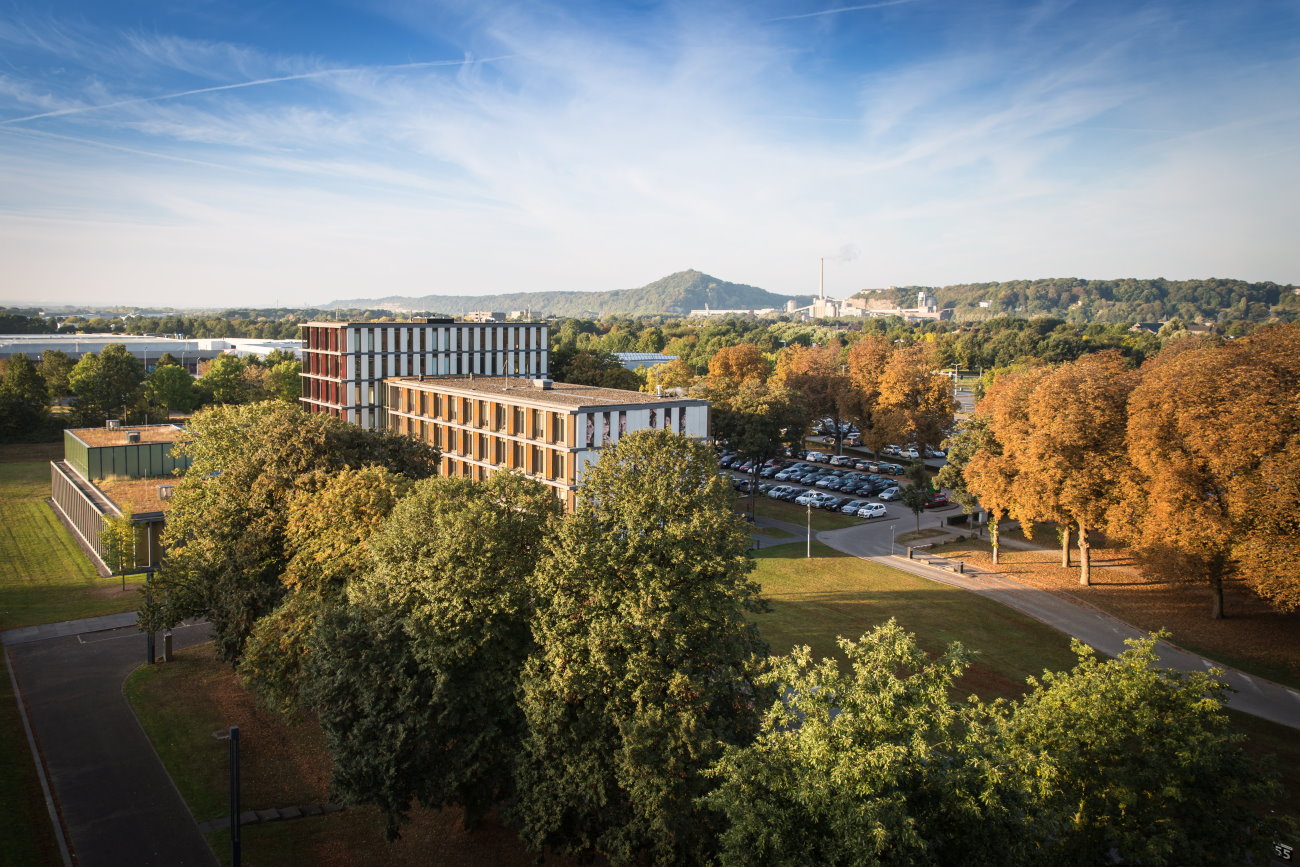
Brightlands is the name by which the province of Limburg, on the eastern border of the Netherlands, prefers to be known. For a nation whose name could be translated as “the low country,” Brightlands makes a bold claim on a different destiny.
Brightlands Limberg is a province-wide, open innovation ecosystem where governments, businesses, educators, researchers and the people collaborate to learn, work and innovate. Together, they are growing the economy, improving health and building more sustainable industries, smarter services and a more resilient food system.
This remarkable effort is the product of crisis. Limburg’s economy once rested on agriculture, tourism and, most of all, on mining. Dutch State Mines was a state-owned coal mining company founded in 1902, and it dominated the province’s economy for generations. The 1959 discovery of the massive Groningen Gas field led, over the next two decades, to almost total abandonment of coal as an energy source.
Mining originally employed one-third of the workforce, and the impact on workers was devasting. Dutch State Mines used foreign investment to reinvent itself, while the national government relocated departmental offices and facilities to Limburg to create jobs. But reinvention was not so easy for coal miners and their families. Even today, the pain lingers in pockets of multi-generational poverty and a sense of opportunity forever lost. In that context, the Brightlands project aims to change perceptions and redevelop local pride in a better and more inclusive future.
Fiber Broadband for All
The Netherlands is highly advanced in connectivity, with nearly 97% of households on broadband. Much of the credit goes to the small size and dense population of the nation, but some belongs to Glaspoort, a joint venture between the KPN telecom provider and a pension fund based in Limburg. It was launched in 2021 to connect 750,000 households and 225,000 businesses across the nation to fiber by the end of 2026.
In Limburg in that year, the project upgraded infrastructure for the remaining 10% of the population still on older technologies. In the process, it brought the first broadband connection to the half-percent of households that had remained unserved, making 100% broadband coverage as universal as voice service.
Raising Human Capital
Brightlands Limburg sees workforce development as critical to its future. The Chemelot Innovation and Learning Lab (CHILL) is a public-private partnership between educational institutions and industry founded in 2011. Its founding idea was that education, industry and innovation should form one integrated system where talent is not trained in isolation but in direct engagement with real-world challenges.
CHILL has evolved into a province-wide human capital platform bridging from primary school through professional experience. Rather than seeking to create new systems, CHILL focuses on flexibly connecting what already exists. With the help of industry partners, it introduced 4,000 primary school students to sustainability and the technologies of the emerging circular economy, in which end-of-life products become feedstock for new ones. More than 2,000 older students have worked on CHILL innovation projects with startups, SMEs and corporates, focusing on Limburg’s key sectors of advanced chemistry, biomedical tech, health, AI, agrifood and high-tech manufacturing.
When an economic downturn and rapid technology change forced companies to focus on the short term, CHILL pivoted. It transformed programs into redeployment pathways for redundant workers. It offered centralized recruitment to support companies and introduced new programs to train workers for emerging sectors. When engineering and business students were falling short on the personal and professional skills required by modern business, CHILL organized educators and industry to provide workshops and coaching on these “soft” skills.
Limburg’s past as an agricultural and mining center has left it with a workforce that, on average, has lower educational attainment than the Dutch average. Brightlands’ answer is Leo Loopbaan, a platform for career development and lifelong learning based on a public-private partnership of government, education, employers’ organizations and labor unions. Funded by public investment and contributions from partner organizations, it offers free services to residents, from skills assessment and career coaching to workshops and such digital tools as a personal skills passport. To date, more than 38,000 employed residents, jobseekers and students have used its services. Another 4,500 have received direct, personalized support and more than 9,500 have taken part in training programs to prepare for new careers.
Limburg Province borders Belgium to the south and Germany to the east, and the regional economy extends into all three nations. Recognizing an opportunity, higher education institutions representing 100,000 students now pursue transnational education through joint programs, shared modules and cross-border learning pathways to prepare their students for a borderless European economy of tomorrow.
Higher education, in the form of Maastricht University, also focuses on advanced talent development. The Brightlands Excellence Program brings together high-potential individuals from government, business and academia, with a scholarship program to attract participants from outside the Netherlands. Over periods of several months, they work in multidisciplinary teams on real-life regional challenges, from sustainability and health to social inclusion and economic development. While burnishing their own leadership capabilities, they also learn how to collaborate effectively across institutional and sectoral boundaries.
Collaboration at the Center
Chemelot, where CHILL was born, is one of four interconnected campuses that are the heart of innovation in Brightlands Limburg. They attract entrepreneurs, researchers, students and investment from around the world, fostering a vibrant environment of interdisciplinary cooperation and open innovation.
At the Chemelot Campus in Sittard-Geleen, more than 3,000 professionals and 1,000 students are working to develop the materials and chemical processes needed for a more sustainable future. Over 130 companies and institutes develop sustainable chemical processes, circular production methods, advanced materials and biomedical applications. Projects such as Brightlands Circular Space, for example, are creating new pathways for turning plastic waste streams into valuable source materials.
At the Greenport Venlo Campus, innovation focuses on the future of food production. Entrepreneurs, scientists and students collaborate on solutions for healthy food, future farming and the bio-circular economy in high-tech green houses, robotics labs and a Future Farming Institute. Research and development activities explore how food can be produced more sustainably while meeting the needs of a growing global population. Through specialized facilities, research programs and partnerships, new ideas move quickly from research into practical applications.
The Maastricht Health Campus is advancing innovations in innovative diagnostis, precision medical treatments and regenerative medicine. Close collaboration among universities, hospitals and businesses forms a full innovation chain, from scientific discovery through commercialization. State-of-the-art facilities and specialized expertise enable breakthroughs aiming to shape a future where healthcare becomes more predictive, preventive and personalized.
At the Smart Services Campus in Heerlen, the focus is on transforming data into smart services that improve quality of life and economic opportunity. Through innovation labs, a human-centered AI academy and incubation spaces, the campus emphasizes using technology to address societal and economic challenges while creating sustainable value.
Citizen-Led Social Change
The municipality of Sittard-Geleen has become a testing ground for connecting citizens, entrepreneurs and institutions to jointly shape solutions to societal challenges. The center of Limburg’s former mining region, Sittard-Geleen faced the challenges youth out-migration, high vacancy rates in the city center, and weak social cohesion and loneliness among elderly residents. The city’s response was Stadslabs (City Labs), which creates connections between people with ideas and those with resources, funded from multiple municipal, provincial, national and European sources as well as private-sector fees and donations.
To date, 10% of the city’s 92,000 people have taken part in Stadslabs projects. They begin with ideas from individuals or groups, which are quickly tested in real-life settings. Stadslabs connects the relevant partners, supports implementation and, for successful projects, guides further development. A key strength of the program is an active network of 250 Stadsmakers, recognized leaders who take ownership of initiatives, from shop owners organizing street events to a retired engineer teaching teenagers how to repair electronics.
Projects connect biodiversity experts with residents working to create green space. They bring scientists into schools while organizing neighborhood conversations about waste, recycling and circularity. The payoff is not just in projects but in cultural change. Residents who previously waited for government to act now take the initiative. Entrepreneurs collaborate where they once operated alone and public officials increasingly experiment and co-create with the citizens they serve.
Digital Resilience
An estimated 300,000 residents of the province have limited to no digital skills. Limburg’s libraries, however, receive nearly 3 million visits per year, providing a strong platform for training programs in basic digital skills and online public services. Digital inclusion is led by the Cubiss provincial support organization for public libraries, headquartered at the Smart Services Campus, which works to connect technology, society and public services. Its Information Points for Digital Government provide free support to citizens in learning to work with online government services – nearly 12,000 in a single year. Cubiss also includes training in recognizing online misinformation and media literacy to keep new digital users safe.
Limburg is home to nearly 115,000 businesses across 31 municipalities. As in most places, smaller, owner-led companies lag behind others in digital adoption. The Brightlands AI Powerhouse at the Smart Services Campus works with them to develop AI-driven tools to improve their productivity. It also provides fee-based consulting to municipalities, educational institutions and public organization to upgrade document processing, citizen communication, policy analysis and other vital activities.
Circular Sustainability
The Chemelot Campus aims to become Europe’s first circular economy and climate-neutral chemical site by 2050. Since 1990, it has reduced its carbon emissions by over 45% while production volumes have grown. Key to this progress is the Brightlands Circular Space at the campus. It is an open-access innovation and demonstration facility focused on scaling the circular production and reuse of plastics, with applications in packaging, automotive, electronics and textiles. It is another strong example of how effective collaboration speeds the creation of new business models, new markets, cost reductions and new employment.
To ensure that circularity and sustainability ability are not limited to large industries, more than 1,100 entrepreneurs, researchers and public partners connect in a community platform called Shift Limburg. Launched by the province and a regional development agency, it provides a one-stop-shop for entrepreneurs to access practical tools, funding opportunities, events and successful examples of circular business practices.
Making the Most of a Moonshot
Limburg is one of three candidate locations to host construction of the Einstein Telescope, a EU program to build a next-generation underground observatory for detecting gravity waves, whose existence was theorized by Albert Einstein. It will consist of an enormous underground triangle of precisely machined tubing, through which laser beams will travel through vacuum, reflecting between mirrors at the corners. The system will detect gravity waves by measuring minute variations in distance, making it one of the most precise scientific instruments in existence.
The final decision on the Telescope site is expected in 2027. But that has not slowed either commitment or investment from Brightlands Limburg. In Maastricht, the Einstein Telescope Pathfinder already serves as a test facility for key technologies, while an Einstein Academy is preparing the next generation of engineers, technicians and researchers to work on the program.
Is Brightlands Limburg, buoyed by hope, jumping the gun? On the contrary, the province believes this “moonshot” project is already providing inspiration for innovation and, on a more practical note, attracting both talent and investment to the region. After all, the original American moonshot seemed to leave little legacy but flags and footprints on the moon. But it launched generations of invaluable technology and laid the foundation of industries that have fostered massive growth for decades.
Population: 1,133,181
Website: www.brightlands.com
Smart21 2025 | 2026
Top7 2026