A Global Reference in Smart City and Intelligent Community Development
I’ve been to Columbus and Central Ohio several times, and I am always impressed by the region’s dynamic blend of innovation, culture, and Midwest charm. It offers visitors an inviting destination where vibrant and historic neighborhoods, scenic parks, acclaimed museums, and a thriving restaurant scene come together. Whether they wander the riverfront, enjoy the energy of the Short North Arts District, experience the wonders of the Columbus Zoo, or explore the nearby towns, visitors will be impressed by the region’s rich history and welcoming spirit. According to my Ohio friends, they tell me that “in Columbus, the soul of the city lives in its makers, dreamers, and communities that welcome everyone in.”
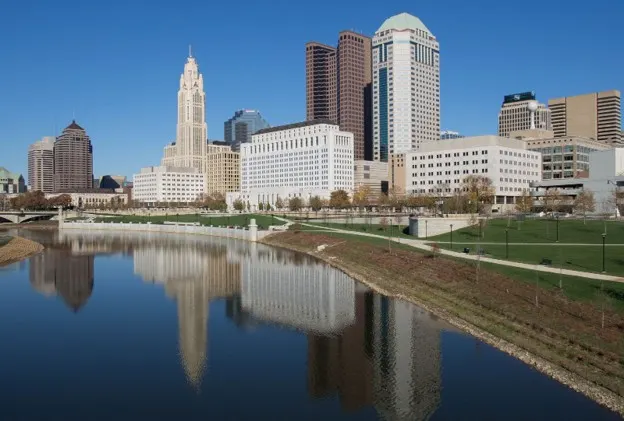
This article comes from John Jung's Substack newsletter. Subscribe here to learn more about best practices, urban solutions, and the most sustainable and innovative smart cities and intelligent communities in the world.
Representatives from cities around the world seek examples of how technology, innovation, and civic leadership can improve the quality of life and economic opportunity. For leaders seeking a roadmap to the future, these best practices and urban solutions must offer more than inspiration. It must offer a proven model that can be studied, measured, and adapted, where possible. Columbus, Ohio, increasingly stands out as one of North America’s most successful models.
Over the past two decades, Columbus has transformed from a traditional Midwestern government and university center into an internationally recognized Smart21 city and Intelligent Community whose influence now extends far beyond the American Midwest.
What distinguishes Columbus as an international reference city is not simply its use of technology. Many cities that claim their smart city status deploy sensors, data platforms, and digital services. Instead, Columbus adopted a much broader vision in which technology serves its people. It added its knowledge sector and innovation to strengthen its community, building economic growth that benefits all of its residents. The result is a city that exemplifies both the “smart city” and Intelligent Community models. Furthermore, it clearly demonstrates how the two concepts can work together to create prosperity, resilience, and inclusion. This is the story of Columbus, the model city.

The moment when Columbus won the 2015 ICF Intelligent Community of the Year Award (Source: Intelligent Community Forum)
A defining milestone in this city’s evolution came in 2015 when Columbus was named the world’s Intelligent Community of the Year by the Intelligent Community Forum (ICF). This recognition is widely regarded as one of the highest honors available to a city pursuing knowledge-based economic and social development. Only one community every year, worldwide, receives this designation after pursuing a rigorous international process examining ICF’s key indicators: broadband connectivity, workforce development, innovation, digital inclusion, civic engagement, and sustainability.
For Columbus, the award went far beyond international recognition and a marketing moment for its economic development campaigns. It validated a fifteen-year transformation strategy of investments in education, digital infrastructure, entrepreneurship, neighborhood revitalization, and public-private and regional collaboration. The recognition of community transformation rather than technology deployment by ICF confirmed that Columbus had successfully built the human capital and institutional capacity necessary to compete globally in the 21st-century knowledge economy.
From ICF’s perspective, it celebrated Columbus as having embraced the key principles that define an Intelligent Community: that the city’s leadership understood that investments in broadband, workforce skills, entrepreneurship, and inclusion ultimately create greater long-term value than investments in technology alone. In other words, technology only matters when it improves the lives of people. That made Columbus a model ICF city, a global reference for becoming an Intelligent Community.
The significance of the 2015 ICF recognition became even clearer only a year later when Columbus applied for and won the United States Department of Transportation’s highly competitive Smart City Challenge, defeating 77 other North American cities to secure $40 million in federal funding to confront one of the community’s most urgent crises at that time, unacceptably high infant mortality rates. But the city did not stop there. It was able to further leverage millions more in additional public and private investment as a result. Not a bad KPI for achieving the ranks of an ICF Intelligent Community of the Year!
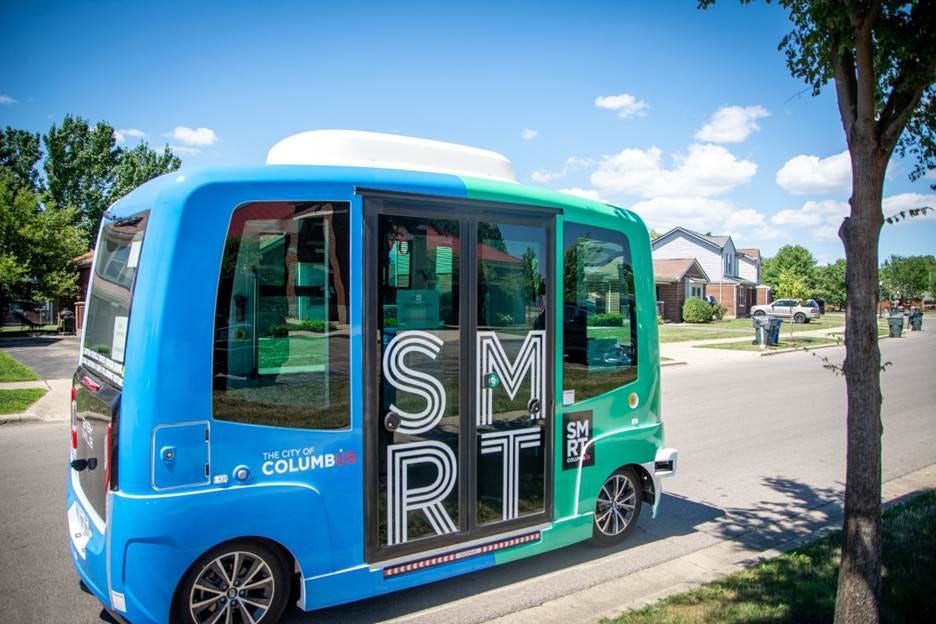
The Smart City Challenge implemented the ambitious Smart Columbus initiative, transforming the region into one of the world’s leading laboratories for urban innovation. (Source: Cities Today)
Many believed that this ICF designation helped establish Columbus’ credibility and demonstrated to the Smart City Challenge adjudicators that the city possessed the necessary collaborative culture to successfully implement its ambitious Smart Columbus initiative, transforming the region into one of the world’s leading laboratories for urban innovation. Connected vehicles, intelligent traffic management systems, electric vehicle infrastructure, autonomous mobility pilots, data-sharing platforms, and multimodal transportation solutions would position Columbus as a national leader in next-generation mobility. Columbus Deputy CIO at that time, Moez Chaabouni, noted that the Smart City Challenge victory gained momentum because the city had already established credibility through its ICF recognition and its foundational investments in broadband, neighborhoods, and public-private partnerships.
The ICF recognition and subsequent Smart City Challenge victory did not create Columbus’ innovation ecosystem; rather, it accelerated and expanded what had already been underway for years. Columbus was already working on transportation innovation, one of Columbus’ strongest assets. Columbus pioneered connected vehicle technologies, intelligent traffic management systems, electric vehicle infrastructure, autonomous shuttle pilots, and integrated mobility services designed to reduce congestion and improve accessibility. It also became one of the leading testbeds for electric mobility and alternative transportation solutions, such as pedestrian safety, bike infrastructure, and multimodal transportation networks. The result was that they could now actively pursue other ways to improve access to employment, healthcare, education, and services while reducing congestion, emissions, and inequities in mobility.
From this transportation demonstration project, Smart Columbus evolved into a civic innovation laboratory focused on solving community challenges through collaboration among government, business, universities, healthcare institutions, and residents. Rather than treating technology as the objective, Columbus adopted the philosophy that technology should serve people and communities. This human-centered approach has become one of the city’s defining characteristics and differentiates Columbus from many earlier smart city initiatives around the world.
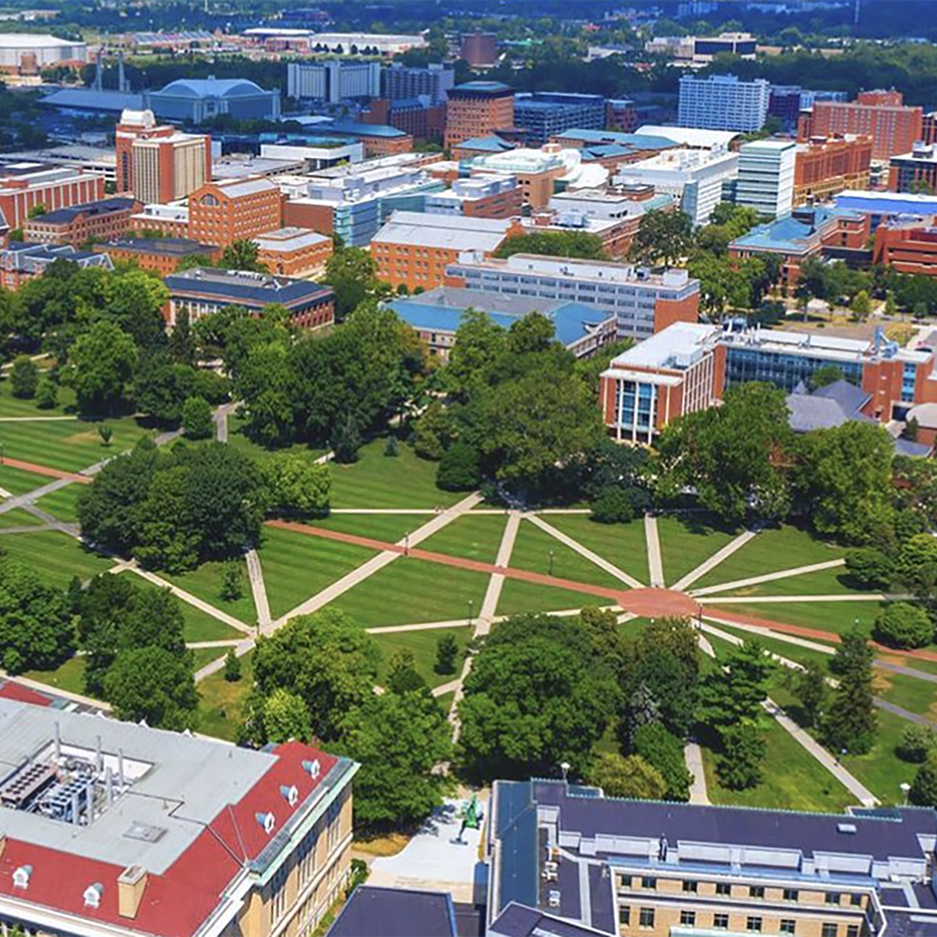
Ohio State University (Source: Hillel International)
Like many of ICF’s greatest Intelligent Communities, Columbus’ success lies in its exceptional knowledge economy, driven by Ohio State University. OSU is considered one of the largest and most influential public research institutions in the USA. Coupled with its Ohio State Innovation District, backed by nearly a billion dollars in investment, it establishes partnerships among researchers, hospitals, startups, and industry leaders while creating new opportunities in life sciences, advanced manufacturing, artificial intelligence, materials science, and biotechnology. This district is a powerful engine for research, talent development, commercialization, and entrepreneurship.
Battelle (Source: Geekwire)
Battelle, the world’s largest independent research and development organization, and Chemical Abstracts Service, a global leader in scientific information and knowledge management, are institutions that generate intellectual capital and commercial innovation. Major employers, including Nationwide, American Electric Power, Cardinal Health, Huntington National Bank, and major manufacturing investments from Honda, and the growing semiconductor industry, further diversify and benefit the entire region as an emerging center for scientific discovery and commercialization, particularly in advanced manufacturing and next-generation technologies. These institutions generate intellectual capital that continuously feeds the Central Ohio regional innovation economy and its economic diversification, making it one of the fastest-growing metropolitan regions in North America.
Columbus is emerging as a Midwest model for climate resilience, sustainable mobility, and regional collaboration. The region’s approach is notable because it blends climate mitigation and infrastructure resilience into one integrated strategy. Columbus’ commitment to digital inclusion and equitable opportunity is also critically important for the future of the city as a successful Intelligent Community. Community programs focused on affordable connectivity, digital literacy, workforce reskilling, and access to devices ensure that all residents can participate in the digital economy regardless of income, age, or location.
And ensuring that all citizens can become engaged in the digital economy is another goal of the city. “The Columbus Way” has become the region’s greatest competitive advantage. Demonstrating a culture of collaboration often referred to as the “triple helix” among businesses, healthcare institutions, local governments, universities, non-profit organizations, and civic leaders, this ideology of routinely working together toward shared objectives is a great achievement. It reflects a unique outcome and a central tenet of ICF: “communities succeed not when a few people become smarter, but when opportunities become accessible to everyone.”
According to ICF, few metropolitan regions in North America execute this model as effectively as Columbus. Consequently, today, Columbus represents the convergence of two powerful ideas. It is a “smart city” because it uses data, digital technologies, and innovation to improve urban systems and services. It is an Intelligent Community because it invests in people, knowledge, inclusion, and partnerships that create long-term prosperity.
From October 13-15, 2026, visitors will have an opportunity to experience this transformation firsthand by attending the ICF Global Summit in Columbus.* The theme is “Midwest Rising: Testbed for a Changing Nation.” They will be able to observe one of the world’s leading examples of an Intelligent Community in action, especially how universities, businesses, governments, and civic organizations collaborate to solve complex problems.
Visitors will see how Columbus leveraged its 2015 Intelligent Community of the Year designation into a globally recognized Smart City strategy. They will be able to discover how Columbus approaches innovation, especially how it integrates mobility, research, entrepreneurship, workforce development, digital inclusion, sustainability, and civic collaboration into a single ecosystem. Attendees will learn about how transportation innovation from the Smart City Challenge improved social outcomes. They will learn about how research institutions can fuel regional prosperity, and how digital inclusion can become an economic development strategy rather than merely a social program.
A key part of the visit to Columbus will be to learn about the region’s Beta District. It is an innovation ecosystem built to provide companies, researchers, and public agencies with a real-world environment where emerging technologies can be tested, refined, and deployed. It is called a 35-mile “Smart Mobility Corridor” along U.S. 33, northwest of Columbus, connecting communities including Columbus and Dublin. Described as one of the world’s leading examples of a new urban typology, a living laboratory, rather than as a traditional business park or research hub, companies come to test technologies on highways, in communities, and across connected infrastructure. These are tests under real operating conditions at a metropolitan scale, meeting critical criteria before they pursue commercial deployment. The corridor offers advanced fiber connectivity, over 45 connected traffic intersections, smart mobility testing environments, test tracks, logistics, and advanced manufacturing capabilities.
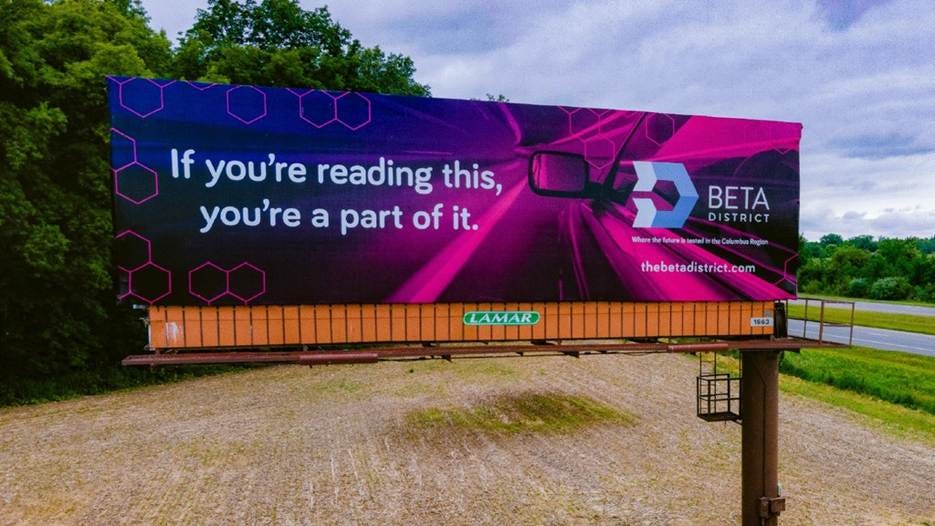
The Beta District in Central Ohio (Source: bizjournals.com)
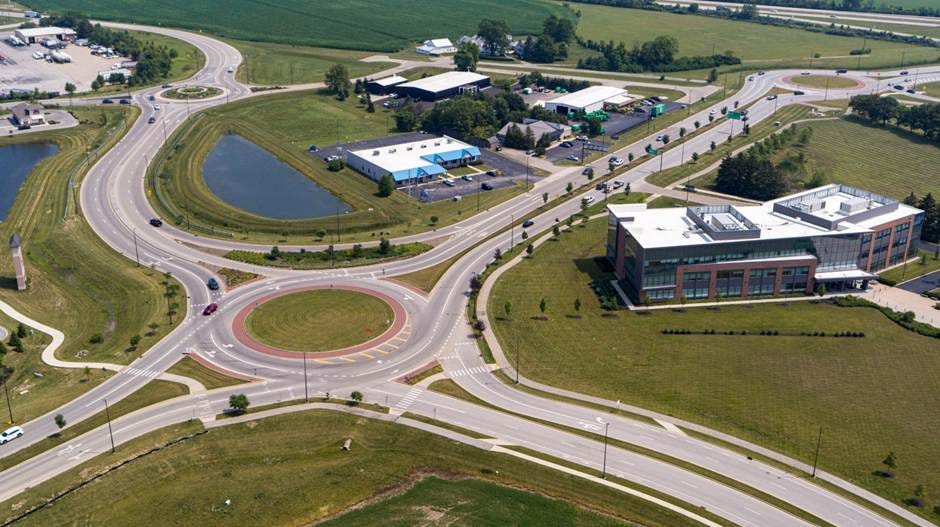
One of the Beta District’s traffic engineering test areas (Source: The Beta District)
The Beta District is especially important for companies testing artificial intelligence, autonomous systems, connected vehicles, robotics, drones, smart infrastructure, and digital health technologies. It is a vital part of the region’s Triple Helix partnerships, enabling innovation among its partner communities and agencies, and demonstrating key Intelligent Community principles. The Beta District also complements the research capabilities of universities and researchers, providing the environment to test ideas outside the laboratory. There is unique value in the transition from research to deployment, which is where many innovation ecosystems fail, and where Columbus has created a significant knowledge development advantage, as well as reduced the risk of innovation through real-life tests. Companies such as Honda and other mobility innovators have benefited from this testing platform, especially for companies developing next-generation transportation solutions, including connected and automated vehicles.
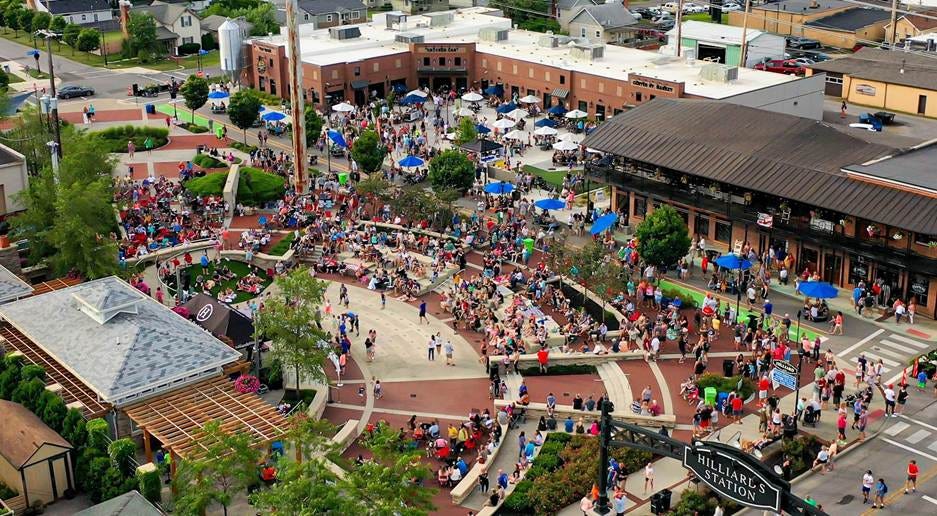
Hilliard, Ohio (Source: Intelligent Community Forum)
Away from the technology and conference vibe, attendees joining the ICF’s VIP Delegation will explore Columbus as well as the region, including the historic charm of Westerville, a walkable city of 40,000 residents, northeast of Columbus. Featuring Otterbein University, Westerville is recognized as one of America’s “Best Places to Live.” Another city to explore is Dublin, a fast‑growing, high‑income suburb northwest of Columbus with 49,000 residents, best known for its Dublin Irish Festival and Jack Nicklaus’ PGA Memorial Tournament. It is also known as one of the strongest Fortune‑ranked corporate regions in the United States. Historic Hudson, with 23,000 residents, is renowned for its charming downtown and picturesque architecture and top‑ranked schools. And Hilliard, with about 37,000 residents, is rooted in its railroad‑station origins, but is transforming with its tech‑focused business partnerships. All four cities had been recognized in the past by ICF as Smart21 Cities and Top7 Intelligent Communities. Hilliard is a current 2026 contender for this year’s Top7 competition.
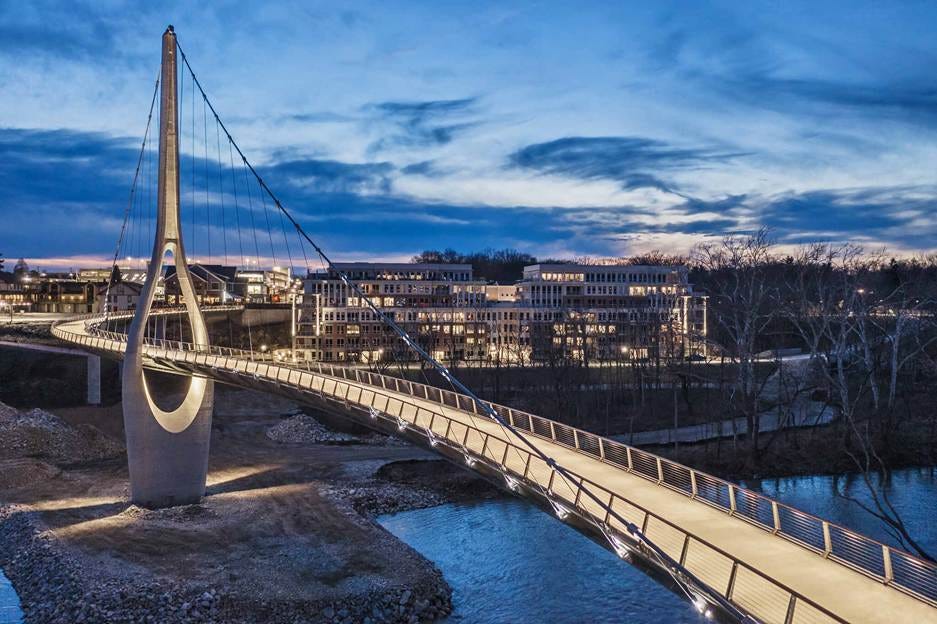
Any visit to Dublin, Ohio, must include crossing the Dublin Link Bridge. (Source: touristsecrets.com)
Columbus’ journey offers an important lesson for communities everywhere: the future belongs not to the cities with the most technology, but to the cities that most effectively align technology with human needs and community aspirations. Attendees of this gathering will leave with practical lessons that can be adapted to communities of every size, since world-class innovation does not require the scale of much larger international cities. Rather, it looks to the qualities of vision, leadership, and collaboration with a Northstar focus on a city’s willingness to place people-first, namely at the center of technological change.
For more information on how you can attend and register for the 2026 ICF Global Summit: Midwest Rising - A Testbed for a Changing Nation in Columbus from October 13-15, 2026 and how to join the ICF’s VIP Delegation that will attend the conference, awards dinner and undertake site visits to Central Ohio’s Smart21 and Top7 Intelligent Communities from October 12-16, 2026 refe r to the Intelligent Community Forum’s website.

Showing 1 reaction
Be the first to comment